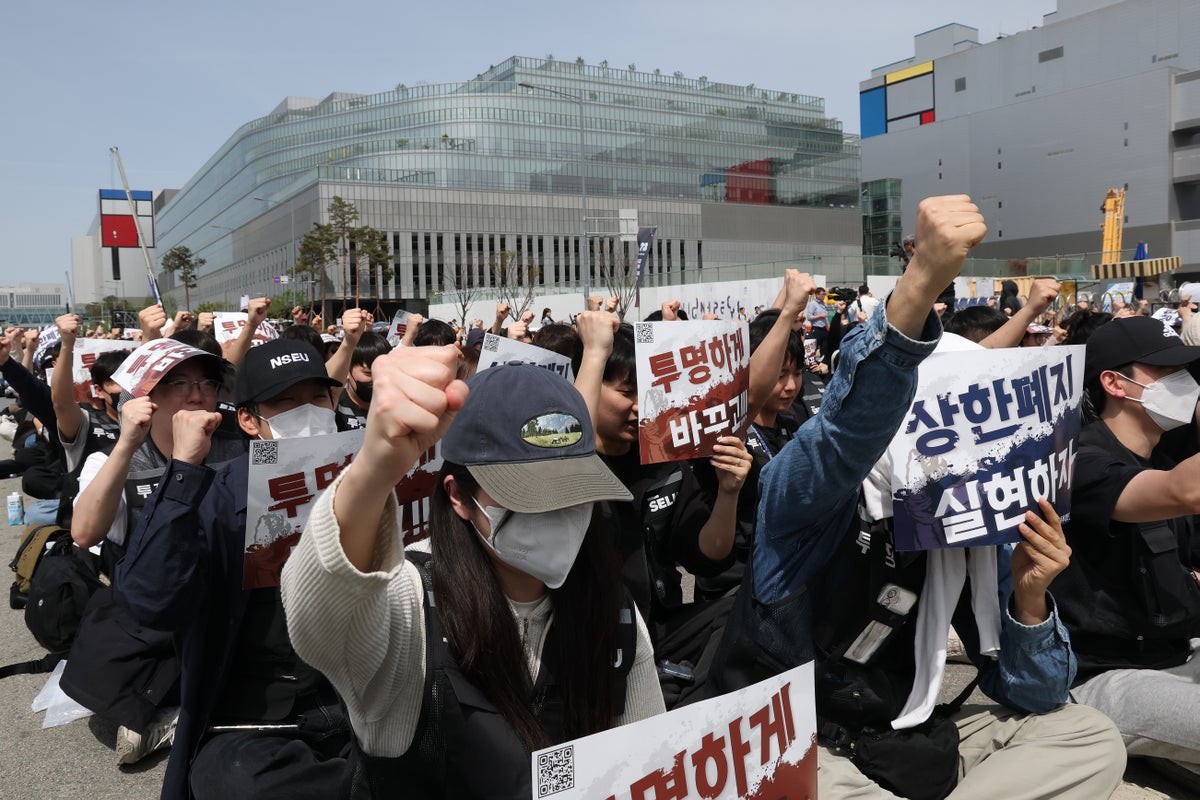
Talks are dragging out. Samsung Electronics and the Korean union are still at odds, though a mediator claims they are narrowing the gap. Pressure is mounting from above. The government is sweating. So are the business groups. Everyone wants to avoid a strike. A major one.
The clock is ticking down. Nearly 48,000 employees are slated to walk out for 18 straight days starting Thursday.
The stakes? Astronomical.
Samsung accounts for roughly a quarter of South Korea’s entire exports. An 18-day blackout isn’t just a labor dispute; it’s a national economic event. Since the company makes the most memory chips in the world, a stoppage ripples globally. This isn’t hypothetical. We’re in an AI gold rush. Supply chains are already tight. Cutting off Samsung’s output now would hurt. Badly.
Park Su-keun runs the National Labor Relations Commission. He’s the guy facilitating the talk. He told reporters concessions happened. Both sides blinked. Yet, they remain stuck on two core issues. He wouldn’t specify which ones. Just that an agreement is “possible.” The talks were supposed to wrap by 7 p.m. Tuesday. Did they finish? The air remains thick.
Samsung stayed silent. Standard procedure.
A union rep offered a slightly softer stance: “We are making every effort to come up with a plan that satisfies the membership.”
The reality is that all our citizens are worried. Think about the ripple effects. — Industry Minister Kim Jung-kwan
The market liked hearing about the “narrowing differences.” Especially after the government hinted last weekend at emergency arbitration. If the state steps in, they can order arbitration and pause any strike action for 30 days. It buys time. It also sends a message. Don’t cross the line.
Shares in Samsung dropped 2 percent on Tuesday but bounced back slightly. Over the week? Down 1.3 percent. Nervous money.
What’s the downside if no deal is struck?
An anonymous central bank official estimates a worst-case hit to South Korea’s GDP growth. The forecast was a solid 2.0 percent expansion for the year. An 18-day strike might shave off 0.5 percent of that. Ouch. That assumes around 30 trillion won in chip production gets scrapped. Plus weeks of lag as factories scramble to ramp back up.
KB analyst Jeff Kim looked at the chip data. He expects a 3 to 4 percent dip in DRAM supplies. NAND drops by 2 to 3 percent. Prices? They go up. Again.
But for investors, the chip shortage isn’t the only nightmare. The real fear is the precedent. Will Samsung cave to demands to bake higher bonuses directly into contracts? If they do, labor costs rise permanently. Not a one-time fee. A permanent hike.
“The point is how they formalize pay increases,” said Lee Seung-yub at Quad Investment Management.
The union wants two things: kill the bonus cap (currently 50% of annual salary) and mandate 15% of operating profit go into bonuses. Make it a contract clause.
Samsung’s counter? Give memory chip workers a massive one-off bonus this year—beating rival SK Hynix’s payout. Keep the cap forever.
It’s been a tense decade. Chairman Jay Y. Lee promised to stop union-busting back in 2020. That era supposedly ended. It feels like a different lifetime. Yet here we are.
The anger comes from a glaring pay gap. SK Hynix overhauled their pay last year. They started feeding high-bandwidth memory to Nvidia. Their workers got bonuses more than three times higher than Samsung’s.
Talented Samsung employees started leaving. Lots of them. Union membership surged in response. It’s a simple reaction: people want fair pay.
Is this fair? The union says yes. Samsung says it’s unsustainable.
Complicating matters further, a court granted a partial injunction on Monday. Essential staffing levels must stay. If the strike happens, Samsung requires 7,087 specific workers to show up and keep the lights on. The rest? They pick up the sign.
Thursday is the deadline.
Nobody knows if they’ll make the call.