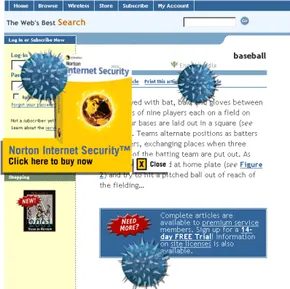
You know the drill. You click a link, expecting content, and suddenly something slams onto the screen. It’s a floating ad. It hovers over the main page for five to thirty seconds, blocking your view and often hijacking your mouse cursor. It’s aggressive. It’s loud. And it is here to stay.
This specific page is rigged to demonstrate the behavior. If your browser supports it, you likely just saw an ad float across the screen for five seconds before settling in the upper-right corner. If you want to see how bad it can get, head over to UnitedVirtualities.com or EyeBlaster.com. They specialize in these intrusive campaigns.
Why Advertisers Love Floating Ads
The reason you are seeing them more often comes down to simple economics. They work.
Floating ads grab attention by force. They are animated. Many include sound. They interrupt the “program,” much like a TV commercial, demanding your eyes. Because they can take up the entire screen, they offer branding power that static banner ads or sidebars simply cannot match. You can’t ignore them.
The numbers back this up. Floating ads boast an average click-through rate (CTR) of about 3%. That means for every 1,000 times the ad is shown (impressions), 30 people actually click it. Compare that to standard display ads, which often linger in the single digits of a percent.
Because advertisers are willing to pay a premium, publishers are willing to tolerate the backlash. The cost? Anything from $3 to $30 per 1,000 impressions, depending on the campaign and the brand. That is a massive payout for an annoyance.
The high click-through rate and superior branding impact mean advertisers pay significantly more for floating ads than for passive display banners.
The Annoyance Factor
There is only one major downside: people hate them.
Some users become genuinely infuriated. I’m not talking about mild irritation. We are talking about death threats and multi-page email rants. This intense negative reaction is the only thing keeping floating ads from being on every single website. Publishers are cautious. They don’t want to alienate their audience entirely.
This highlights a strange psychological shift in digital advertising. When pop-up ads first appeared, they were universally reviled. Sites rarely used them. Over time, people got used to the pop-ups. The complaints stopped. Now, pop-ups are everywhere.
Television offers a better analogy. Imagine if TV shows were completely ad-free today. Then, suddenly, a network started playing eight minutes of commercials in the middle of every episode. People would riot. It would be unbearable. But we are used to TV ads. We tolerate them. During the Super Bowl, the ads are arguably more entertaining than the game itself.
Adaptation is Inevitable
People are currently in the “rioting” phase with floating ads. They are new. They are jarring. They feel like an invasion of privacy and usability.
But as with pop-ups and TV commercials, the shock value will wear off. Users will acclimate. The annoyance will fade into background noise. When that happens, the economic incentive will drive these ads into even more spaces on the web.
The question isn’t whether they will become common. It’s how much of your screen they will eventually claim before you stop noticing.