It’s 13 minutes long. That’s how long Nightborne lasts before you want to look away.
Neill Blomkamp just dropped this sci-fi short on Monday. He says it’s based on Peter Watts’ 2003 novel Echopraxia. (The source text says 2014, but Watts published Blindsight in 2006 and Echopraxia was a planned sequel that never quite landed in the same way; let’s stick to the text: Watts’ novel Echopraxia ). Blomkamp directed District 9 and Gran Turismo. Now he’s fronting Barley Studios, his new AI production company. The goal? Show off Seedance 2.0, ByteDance’s new text-to-video model.
The result feels less like cinema and more like a tech demo wearing a costume.
How Barley Studios made the short
Blomkamp calls it a “test start.” He wants to make a full feature in this format later. Maybe. Right now, he’s showing what happens when you feed a script into Seedance 2.0 and hope for the best. The faces? Modeled after real actors. The voices? Also human. But the pixels? Generated entirely by the algorithm.
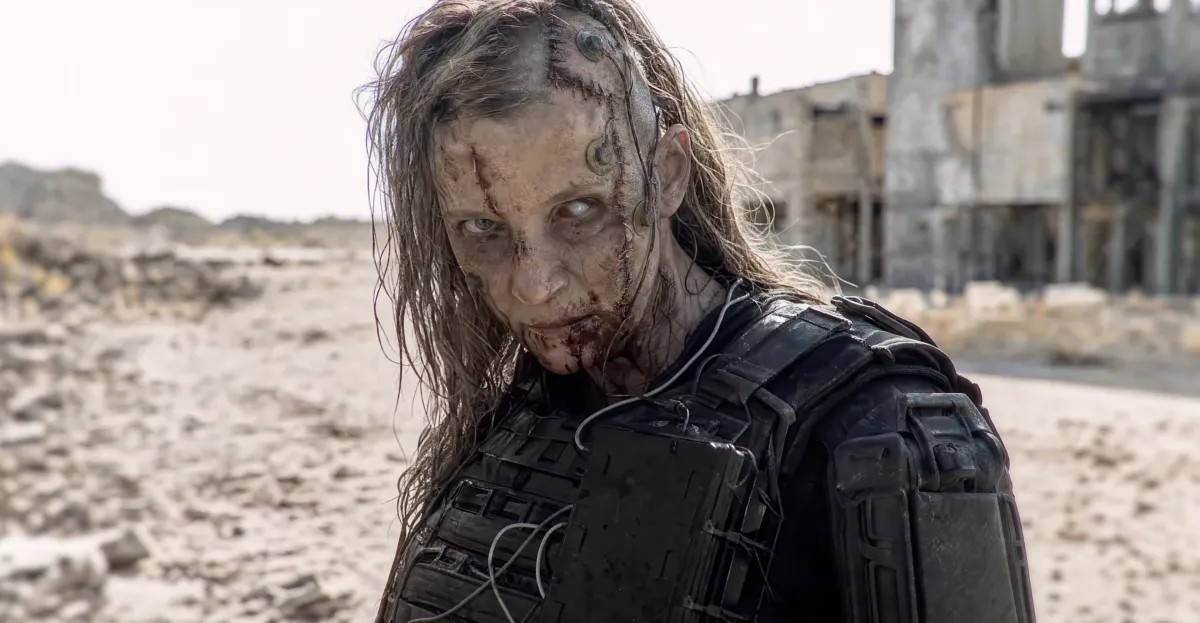
The plot is grim. A military conflict between the US and Syria. An American pilot gets shot down. Helicopter goes down. She’s injured, head intact, body wrecked. Perfect candidate for Project Nightborne. This government program turns brain-dead soldiers into weaponized zombies. Remote-controlled. Undead. Cheap labor for war.
She’s not unique in this. The military has endless bodies. She’s one of many.
The video cuts between her zombified movements and fake documentary-style interviews. Austyn Daines edited it. The editing hides the seams. Seedance 2.0 only generates a few seconds at a time. You don’t see the pauses. You don’t see the reset. You just see the flow. The dialogue mixing is good, almost too good. It tricks your brain into thinking people are actually talking.
But are they?
Why it feels hollow
Look closer at the background. Signs in gibberish. Characters speaking with odd emphases. Like they don’t know what the words mean. They’re just making sounds that resemble speech.
Blomkamp says real concept artists worked on it. 32 human actors let their likenesses be used. But that’s not enough. The machine-made feel bleeds through. It’s not art. It’s content.
Where is Blomkamp’s voice? He made Alive in Joburg. That film used VFX to explore apartheid-era bigotry. It had intent. Nightborne has none. Without the AI gimmick, nobody would care. It’s unremarkable.
The AI can mimic emotion. But it doesn’t understand it. It reflects what it was trained on. It doesn’t create. It regurgitates.
The backlash and the irony
The short looks like other Seedance 2.0 demos. Jia Zhangke’s dance video. The viral Tom Cruise and Brad Pitt fight. Traditional filmmakers know how to hide the tech’s limits. But the limits are still there. They just wear better clothes.
Text-to-video is getting better. But audiences aren’t excited. Blomkamp thought this would generate buzz. Instead, people called it slop. They said he’s washed. Similar to the backlash Darren Aronofsky faced with his AI Revolutionary War series.
Maybe that’s the point.
Project Nightborne is about power. Repurposing dead bodies. No consent. Cheap labor.
Generative AI is destructive, but not in the same way. No killer zombies. But the drive is the same. Useless things, churned out for profit. Ignoring the humans who built the models. Ignoring the cost.
Is this the future? Or just a warning label?
“Project Nightborne is all about individuals in positions of powers repurposing dead people’s bodies… Generative AI isn’t as destructive… but those pushing for its use are driven by a similar desire.”
You can watch it. You’ll see the flaws. You’ll feel the distance.
And then? You’ll keep scrolling. Because there’s always more. Faster. Cheaper. Empty.