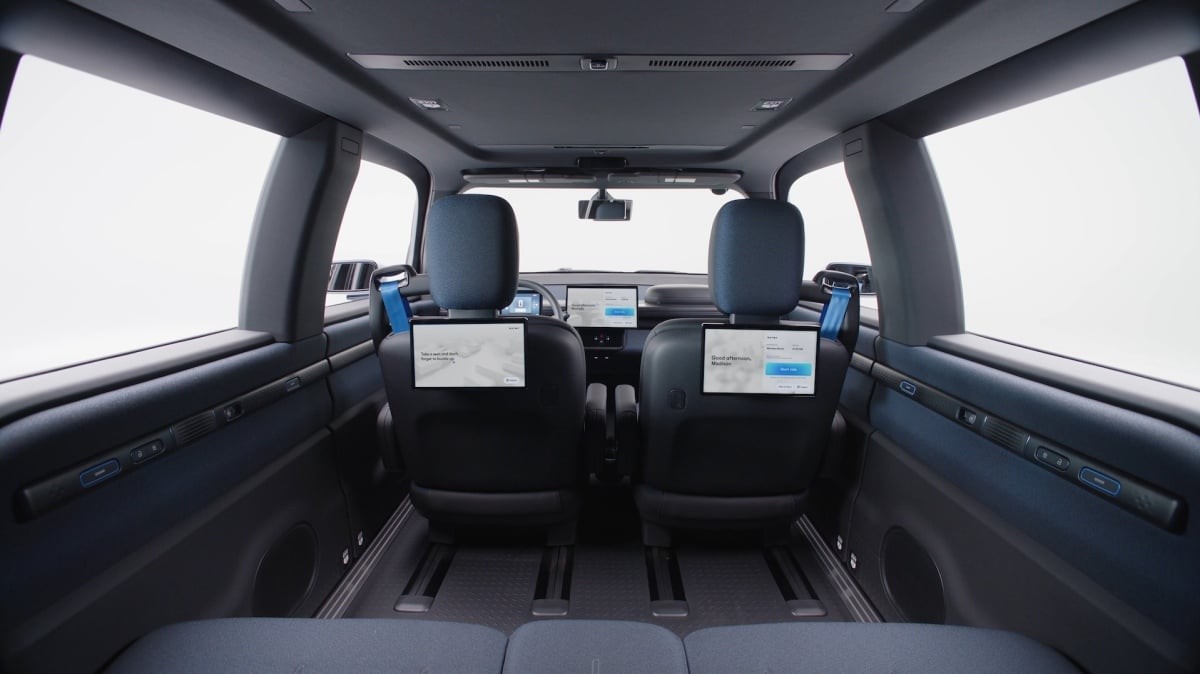
Waymo has new rides. Call it the Ojai.
It looks less like a Jaguar and more like… a pod. A very clean, very quiet pod.
Google-owned Waymo says this is roomier. Accessible. It promises a “living room on wheels.” Sounds nice, until you think about the price tag or the wait time, but we are not here to judge the economics, just the engineering.
The doors slide up.
Elevator-style. Low steps. Flat floor. There is even a handle built right into the seat to pull yourself up. It reminds you of Zoox, the competitor with those weird carriage-like boxes. Different vibes, same goal. Make it easy for people to get in. Especially the people who usually struggle with car doors.
Inside? Three big LED screens.
They show your route. Temperature. Music. It’s got Braille embedded. Screen reader compatibility is built-in. Blind and low-vision riders seem to like this tech. A New York Times piece noted that affinity earlier this year. Technology helping the vulnerable isn’t new, but packaging it this nicely? That’s the sales pitch.
“Living room on wheels.”
It’s catchy. Marketing loves a metaphor.
But what drives the thing? Sixth-gen Waymo Driver software. They say it handles snow better. Better than before, anyway. Don’t get your hopes up if you’re in New York. Or Boston.
These cars launch in Los Angeles. Phoenix. San Francisco.
Temperate cities. Places where rain isn’t a constant existential threat to the algorithm. After the initial free-ride phase for select users, they’ll head to Denver, Vegas, and San Diego. A slow creep outward.
Because weather is hard.
Remember when Waymo pulled the plug in San Antonio? Houston? Dallas? Atlanta? Some cars drove straight into floods. Not a good look. It raises questions. Should autonomous vehicles drive in storms? Who decides the line between “adverse” and “unacceptable”?
Waymo thinks its data speaks loudly enough to ignore the hiccups.
Their latest stats claim the Driver is involved in 92% fewer serious crashes than humans under identical conditions. Thirteen times fewer injuries or fatalities.
Nineteen percent is a big margin. Or is it?
We keep waiting for the robot to make the ultimate mistake. It hasn’t happened yet. At least not in the way the headlines demand. So they roll on. Toward warmer weather. Toward bigger screens.
Who is left behind?