You remember the shoe bomber. Then came the underwear bomber. Neither got off the plane with their detonators intact, but the psychological damage was done. Fear of flying spiked. More importantly, the failures highlighted glaring holes in airport security protocols.
Governments responded with billions in funding. Since 9/11, the TSA (Transportation Security Administration) has rolled out a massive suite of countermeasures. We’re talking about the 3-1-1 liquid rule. Aggressive pat-downs. Full-body scans.
One of the most controversial tools in this arsenal is the backscatter X-ray scanner.
These machines don’t just look for metal. They create a high-contrast outline of your body. The images look like a chalk sketch or a detailed medical X-ray. The goal? To spot non-metallic threats. Plastic explosives. Ceramic knives. Illicit drugs. Things that standard metal detectors miss entirely.
Privacy advocates hate them. They argue these scans violate bodily autonomy. Health experts worry about radiation exposure. The technology sits at the intersection of fascinating physics and intense civil liberties debate.
To understand why it works, you have to look at the legacy tech first.
This Ray is Rated X
Traditional airport security relies on transmission X-rays. Think of the conveyor belt where you slide your carry-on bag. The machine shoots a beam through your luggage. Dense objects (metals, batteries) block the rays. They show up as dark silhouettes against a lighter background.
Backscatter technology flips the script. It doesn’t look at what goes through you. It looks at what bounces off you.
Here is the simple physics:
- A low-energy X-ray beam scans your body.
- Most radiation passes straight through soft tissue.
- Some radiation bounces back, or “scatters,” off the surface of your skin and any objects on or in your body.
- Detectors on the same side as the source capture this scattered radiation.
Because different materials scatter radiation differently, the computer can reconstruct an image. Metal and dense plastics show up with high contrast. Your skin appears relatively uniform.
This makes it incredibly effective at finding concealed items that don’t trigger traditional alarms.
“The scanners highlight materials that metal detectors and older X-ray machines don’t see, such as plastic explosives, illicit drugs or nonmetallic weapons made of ceramic or other materials.”
But does the radiation hurt you?
That’s the question keeping civil rights groups up at night. And the question keeping health physicists busy with calculators. We’ll get to the dose levels next.

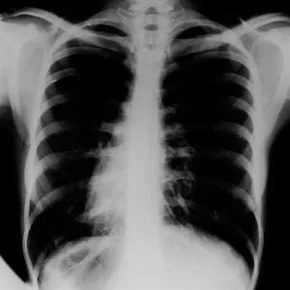
Traditional medical imaging relies on high-energy beams. These machines use X-ray tubes to bombard the body with electromagnetic radiation. The physics is straightforward. Photons travel through flesh and flesh alone. Denser materials like bone block the path. The remaining energy hits film or a digital sensor. The result is a contrast map. Darker areas show soft tissue. White areas indicate bone. It is a static snapshot of internal structure.
Airports cannot afford this delay. Developing film takes time. Conveyor belts move fast. So security uses dual-energy transmission X-ray systems instead. These machines look at luggage, not people. The beams are filtered to detect density differences. Operators are trained to spot metals, organics, and non-organics. It is a screening tool for cargo.
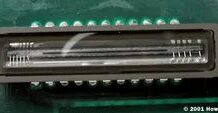
Backscatter technology is different. Much different. It is often called a soft X-ray scanner. The hardware layout flips the script. In a standard setup, the source and sensor are on opposite sides. Here, they sit side-by-side. The sensor and the X-ray tube are next to each other.
The beams are weaker. They do not penetrate deeply. They stop at clothing. They go about an inch into the body. Tissues scatter the rays. The energy bounces back. The sensor catches the reflection. The image resembles a naked human. It reveals shape. It highlights anomalies.
“If that body happens to be surreptitiously carrying a dubious or irregular object, authorities will know.”
The resolution is high enough to show irregular packages. It is also high enough to show love handles. This detail causes problems. Privacy advocates argue the images are too intrusive. The debate continues. The technology works. The ethics do not.

You are standing in line. You might be wearing jeans, a hoodie, maybe a belt. The machine doesn’t care. It renders an image that looks like you are naked. The technology is real. It isn’t a sci-fi nightmare. It is right here.
Traditional X-rays punch through you. They use powerful rays that can damage tissue if you get too much. That is why dentists put lead aprons on you. They block the beam.
Backscatter machines are different. They use weaker X-rays. The dose is tiny. About 0.02 to 0.03 microsieverts. Think of it as one hour of natural background radiation. It is not enough to punch through your body.
Instead, the rays hit your skin. They scatter. They bounce back.
The scanner picks up those scattered rays. It builds a 2D image. Organic materials scatter differently than non-organic ones. Your skin scatters one way. A hidden knife scatters another. A ceramic blade scatters yet another. The contrast is high. Security staff can see what is under your clothes.
Physics nerds like the technical side. When X-rays hit atoms, they knock electrons loose. This creates ions. It also slows down some photons. This process is called ionizing radiation. The scanner reads the energy of those ions. It maps your body. It flags the weird stuff.
The differences between organic tissue and hidden objects are often easy to see, even to the untrained eye.
This isn’t cheap tech. A single unit costs over $100,000. But the TSA is buying them anyway. They run about 500 scanners across nearly 100 airports. They plan to deploy 1,000 total.
That means nearly 70 percent of travelers will be screened this way.
Security officials need to roll out hundreds more. They have to solve two problems. Privacy. And health.
Some groups want these machines out of airports. They think the cost is too high. They think the risk is too real. The debate is heating up.
Public Peep Shows and the End of Privacy
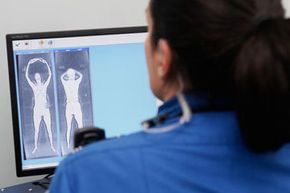
Most people aren’t thrilled about security agents seeing what amounts to a naked photo. That’s the visceral reaction to backscatter screening. The TSA insists the images vanish instantly. They also claim the screeners sit in a remote room, far from the checkpoint. This distance is supposed to make travelers feel less visually violated.
It’s a strategy to defuse racial profiling accusations too. Since the software can’t detect skin color or clothing, the screener isn’t biased by preconceptions about the person standing in the booth. Theoretically, it’s fairer.
But for most travelers, the fact that these machines create nearly nude images is the dealbreaker. To ease that discomfort, the TSA tested updated software. It projects a cartoon-like avatar instead of realistic imagery. Suspicious items get highlighted in generic shapes. This lets authorities flag people for pat-downs without exposing intimate details.
So far, these privacy complaints haven’t caused the same chaos as aggressive pat-downs. But opposition remains fierce.
The ACLU argues this process is inherently humiliating. Subjects are effectively stripped bare digitally. People with private medical equipment, like colostomy bags, face unnecessary scrutiny. The group contends these backscatter X-ray scanners should be rare exceptions, not a systematic filter for every traveler.
In Britain, concerns ran deeper. Officials worried about child pornography laws. Consequently, travelers under 18 were exempt from the scanners. Religious leaders also pushed back, arguing that generating nude images violates their core beliefs.
Yet privacy isn’t the only hurdle. A significant chunk of the anti-scanner crowd focuses on health risks. Specifically, radiation exposure.
Radiation Nation
The debate over whether these scanners emit harmful ionizing radiation has persisted for years. While the TSA maintains the radiation dose is negligible—comparable to a few minutes of flying or even a chest X-ray—skeptics argue that cumulative exposure matters.
Medical experts point out that backscatter technology uses low-energy X-rays. This is distinct from the millimeter-wave scanners that use non-ionizing radio waves. The latter pose no known health risk. But with backscatter, the question remains: is “low dose” truly safe for repeated, daily exposure?
For frequent flyers, the answer isn’t clear. Some researchers suggest the risk is virtually zero. Others urge caution, citing the principle of keeping radiation as low as reasonably achievable. Until long-term studies are published, the uncertainty fuels the controversy.
Travelers are left weighing civil liberties against security protocols. Is the trade-off worth it? The TSA thinks so. Many passengers aren’t convinced. The technology evolves, but the trust doesn’t always follow.
The Cost of Convenience
Security and health officials insist that the radiation dose from backscatter scanners is negligible. Most travelers nod along, but trust isn’t exactly abundant here. You might feel uneasy standing still while a machine attempts to look inside you, regardless of what the brochures say.
Consider the math. Officials claim you’d need to pass through these scanners roughly 5,000 times to equal the radiation dose of a single chest X-ray. That sounds like a lot. It’s a comforting number until you look at the alternative. The TSA points out that flying itself exposes you to significantly more radiation. Cosmic rays bombard the Earth’s atmosphere constantly. Spend just 60 seconds at 35,000 feet and you absorb more radiation from one scan. The sky is leaking energy at you. Air travel is inherently radioactive.
People aren’t buying it. Scientists warn that ionizing radiation always carries a risk. Skin cancer is the primary worry. The timeline complicates things further. Cancer can develop years after exposure. The link between the scan and the tumor isn’t immediate. It’s buried in statistical noise.
This fear is a market opportunity. Companies like Rocky Flats Gear and Flying Pasties are profiting from traveler anxiety. Flying Pasties sells inserts designed to block scans from exposing private parts to screeners. Rocky Flats Gear goes further. They sell gear that partially protects you from X-ray radiation. It’s a niche industry built on distrust.
The TSA noticed the pushback. They started testing millimeter wave machines as an alternative. The goal is to keep the security benefits without the radiation stigma. These machines are a competing technology that produces images much like those from the backscatter scanners, but instead of X-rays, they use radio waves. Radio waves don’t ionize. They may alleviate concerns about radiation exposure.
There’s another advantage here. Millimeter wave scanners don’t emit radiation. They might have another leg up on their backscatter brethren. They produce 3D pictures. Backscatter units offer simpler, 2-D images. The 3D detail is sharper. It provides better overall security effectiveness. You see more. You worry less.
Backscatter to the Future

The government’s stance on backscatter X-ray technology is a study in contradiction. Officials insist the radiation is harmless. They are also taking privacy seriously enough to make image misuse a felony. In February 2011, the Senate voted to criminalize the sharing of these scans. This legal hammer was supposed to stop screeners from posting nude images online. It didn’t stop them entirely. A scanner at a federal courthouse in Florida proved that even with laws in place, human error and malice remain risks.
How TSA is Addressing Privacy with Millimeter Wave Technology
To soothe the growing panic over bodily exposure, the TSA is rolling out millimeter wave machines. These aren’t just hardware upgrades. They come with software designed to strip away anatomical detail. The goal is simple. Show the threat. Hide the body.
Some units are configured for transparency. Passengers can view the scan results simultaneously with security personnel. It’s a performative act of trust. The idea is to prove that no one is digitally peering under clothes. You see what they see. Nothing hidden. Nothing inappropriate.
Yet skeptics argue this is a game of catch-up. Privacy advocates claim terrorists are already ahead. They know how these scanners work. They know where the blind spots are. Instead of large metal weapons, they hide small amounts of plastic or sheet explosives deep in body cavities. These areas are notoriously difficult for current sensors to penetrate effectively. If sophisticated actors can bypass detection entirely, the technology becomes obsolete when it matters most.
The Future of Air Travel Security vs. Privacy
Whether you view airport scanners as a necessary evil or an invasion of modesty, the trend is clear. These technologies will proliferate. They will appear in airports and other high-security zones. The threat landscape evolves. So do the countermeasures.
This dynamic ensures that debates over safety versus individual rights will never end. It is not a problem to be solved once. It is a constant negotiation. Travelers and government officials will keep trying to find a balance. The technology will keep advancing. The arguments will keep getting louder. There is no final peace here. Just the next iteration of the scan.