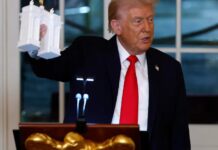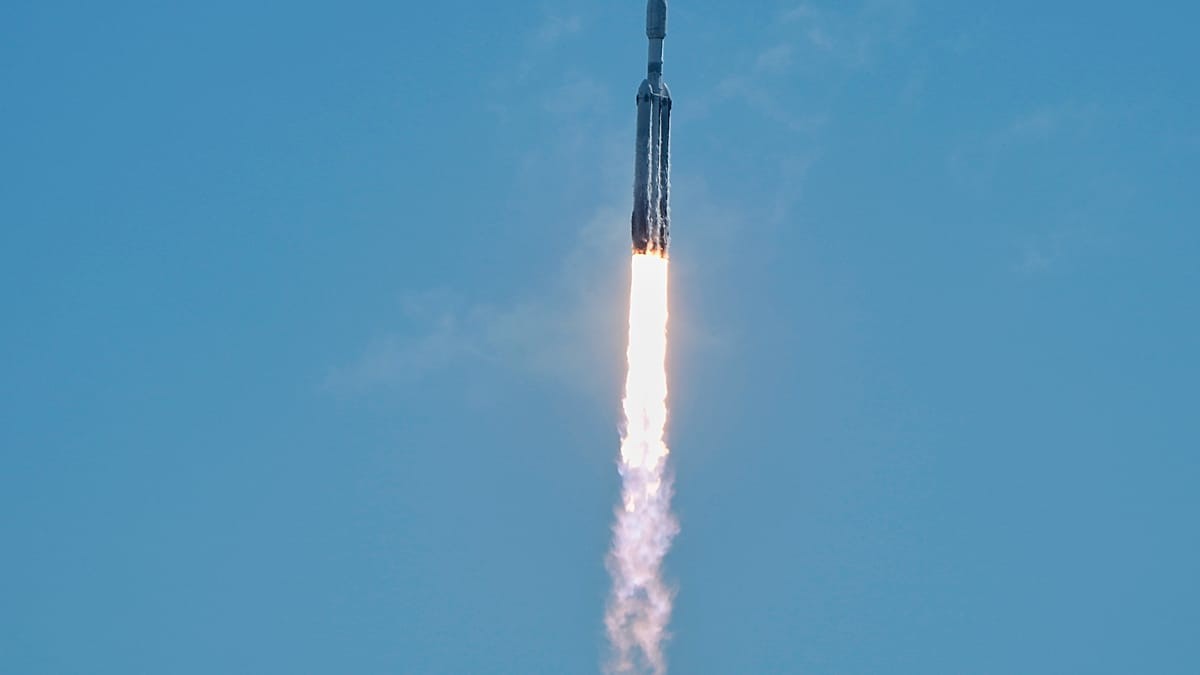
The countdown has started. Elon Musk isn’t playing coy anymore. On Wednesday he announced the plan, which basically amounts to taking one of the biggest money grabs in history live on stage.
Except the company losing billions of dollars.
SpaceX. Formally Space Exploration Technologies Corp. Last year they burned $2.6bn (€2.2bn) out of pure operational losses. They still brought in $18.7bn in revenue, which is respectable, but the red ink flowed freely right through into this year too.
Nobody knows exactly how much Musk wants to raise. The prospectus doesn’t give a number.
Reports say around $75bn (€14.5bn? No. €64.5bn. My bad. Math matters.).
That would crush Saudi Aramco. The oil giant set the record seven years ago with $26bn. SpaceX doesn’t want the crown. It wants the moon.
And Mars.
“We do not want humans to have same fate as dinosaurs”
The filing is part business case, part Hollywood pitch deck. It claims the IPO proceeds will fund the transition of humans into an interplanetary species. Why? Because extinction threats loom. Civilisation might wipe us out if we stay on one rock.
Musk gets paid only if the colony sticks. A permanent human presence on Mars. One million people living there. Really there.
Short of that dystopian-utopian milestone the stock sale alone makes him the first trillionaire. Forbes puts his net worth at roughly $839bn right now. About as much as Poland’s GDP for a full year.
The money pits
Starlink works.
It actually makes money. The satellite internet service pulled in $4.4bn in operating income last year using 10,000 orbiting boxes to beam signal to 10 million users across 150 countries. That cash keeps the lights on while other parts of the empire burn fuel.
The other parts are burning a lot of fuel.
Take X. The social media platform. And xAI. His artificial intelligence company. SpaceX bought them both.
Investors aren’t thrilled. They see bailouts. And rightly so since these acquisitions are loss-leaders of biblical proportions. xAI lost $6.4bn last year from operations. That’s just xAI.
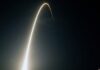
Then there is the original business. Rockets.
It works great when you have government contracts. Which they do. About 20 percent of last year’s revenue came straight from US taxpayers. Five years of contracts. Six billion dollars from NASA and the Defence Department.
It raises uncomfortable questions. Musk was the top donor for Trump. They have a weird history together, mostly thanks to that cost-cutting fiasco called DOGE last year, but they’re still cozy.
Government watchdogs are wondering if SpaceX got preferential treatment. Are these fair market contracts or political favors? Who knows how that lands when Trump eventually leaves office?
Control freak
Musk doesn’t care much about salary.
It stays at $54,088. It has stayed at $54,040 since 2018? No. 2019. It hasn’t changed. He’s working for free practically speaking.
But he’s working for equity.
His compensation is tied to insane targets. Fifteen tranches. Each worth 67 million shares. They vest only if SpaceX hits specific market cap milestones.
One target requires SpaceX to reach a $7.5tn market valuation. Trillion. That is an abstract amount of money for a private company that hasn’t made a profit in the traditional sense for most of its history.
Another condition involves building massive data centres in space. Giant server racks the size of footballs floating above Earth. If he deploys those he gets more stock.
Who else controls this? No one but Musk.
The new stock class gives special votes. Ten votes per share for him and key holders. Regular investors? You get one. Maybe none that matter.
SpaceX explicitly warns future buyers: “This will limit or preclude your influence on corporate matters.” They can pick their own board. They pick the majority of it. You get to write the check and then watch.
The roadshow starts June 4th. The marketing machine revs up.
Is anyone ready to bet that Mars happens in time to justify this price? Or are we just watching the wildest financial stunt ever staged?