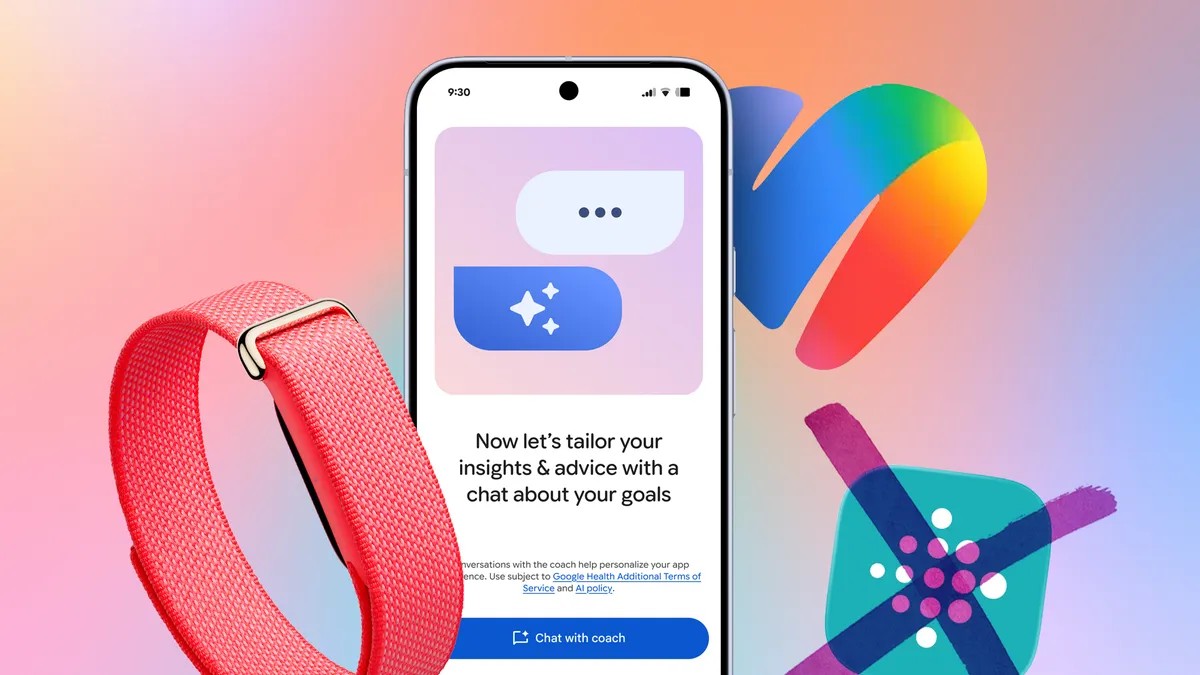
Google is fundamentally restructuring its health technology portfolio, moving away from simple data tracking toward an AI-driven coaching ecosystem. Announced on Thursday, this strategic pivot involves three key components: a new screenless wearable, the retirement of the legacy Fitbit app, and the expansion of an AI health coach.
While the new hardware offers a minimalist entry point, the real focus is on software. Google is betting that users value interpretation over raw data, using artificial intelligence to turn health metrics into actionable daily plans.
The Fitbit Air: Minimalist Hardware for Maximum Data
The centerpiece of the hardware announcement is the Fitbit Air, a $100 fitness tracker that strips away traditional smartwatch features. There is no screen, no notifications, and no clock. Instead, the device functions purely as a passive sensor, designed to compete with training-focused bands like Whoop.
Key details about the Fitbit Air:
– Price: $100 (standard) or $130 (Stephen Curry special edition).
– Availability: Pre-orders start Thursday; ships May 26.
– Compatibility: Works with both iOS and Android.
– Core Function: It collects health data but relies entirely on the companion app for insights.
The Fitbit Air is designed as an entry point into Google’s subscription model. It includes three months of Google Health Premium ($10/month or $100/year), which unlocks the advanced AI features that differentiate it from basic trackers.
Meet Google Health Coach: The AI Engine
The true driver of this new ecosystem is the Google Health Coach, an AI assistant built on Google’s Gemini model. Previously available only in beta within the Fitbit app, it is now rolling out to all Google Health Premium subscribers.
Unlike traditional trackers that display graphs and numbers, the Coach acts as a proactive concierge. It analyzes data from wearables and provides personalized recommendations for fitness, recovery, and sleep without requiring user prompts.
New capabilities include:
– Processing uploaded medical records, PDFs, and photos to tailor advice.
– Generating structured training plans based on current recovery status.
– Offering insights across both Android and iOS platforms.
While competitors like Garmin, Whoop, and Oura already offer similar AI-driven insights, Google is leveraging its broader software infrastructure to integrate these tools more deeply into the user’s daily digital life.
Goodbye Fitbit App: The Great Migration
Perhaps the most significant change for existing users is the phase-out of the standalone Fitbit app. Starting May 19, the Fitbit app will automatically update to the Google Health app.
This transition is seamless for users:
– No manual action is required.
– All historical health data will carry over.
– Google Fit users will also migrate to this platform later this year.
The new Google Health app consolidates data from multiple sources—including Fitbit devices, Apple Health, and Health Connect—into a single interface. The experience is reorganized into four primary tabs: Today, Fitness, Sleep, and Health. The design prioritizes recovery and structured training plans, marking a departure from the step-counting focus of previous years.
Why This Strategy Matters
Taken individually, these announcements appear as routine product updates. Collectively, however, they reveal a clear strategic shift for Google:
- Hardware as a Gateway: The Fitbit Air serves as an affordable, low-friction entry point to collect user data.
- Software as the Value Proposition: The subscription-based Google Health Premium and AI Coach are where Google aims to generate recurring revenue and user engagement.
- Unified Ecosystem: By merging Fitbit, Google Fit, and third-party health data into one app, Google seeks to become the central hub for personal health management.
A Note on Privacy
As Google integrates more sensitive medical records and detailed health metrics into its ecosystem, privacy remains a critical concern. During its 2020 acquisition of Fitbit, Google pledged to keep health data separate from its advertising business. The company reiterated this commitment during Thursday’s announcements, but the increasing volume of sensitive data flowing into Google’s servers will likely continue to attract scrutiny from regulators and privacy advocates.
Conclusion
Google is moving beyond the era of simple fitness tracking, aiming instead to own the “interpretation layer” of personal health data. By combining affordable hardware with sophisticated AI coaching, the company is positioning itself not just as a device maker, but as a comprehensive health partner. For users, this means a more integrated, albeit subscription-heavy, approach to managing wellness.