
She’s standing in the customs line. Phone in hand. Briefcase shifted to her left hand. Suddenly, two uniformed officers step in. They don’t ask. They tell her to step out. Random search, they say. She needs to surrender the laptop. The phone. Everything digital.
When can she get it back? No idea. Wait until we’re done looking.
This isn’t a thriller movie plot. It’s the reality for anyone crossing the U.S. border. And according to the 9th Circuit Court, it’s totally legal. Federal Customs and Border Protection (CBP) agents have the green light to confiscate and examine electronic devices from anyone entering the country. They don’t need probable cause. They don’t need a warrant. They can look for evidence of any crime, period.
For international businesses, this is a nightmare. Employees travel constantly. Data gets moved. Intellectual property is at stake. But even for U.S. citizens, the shock is real. The Fourth Amendment promises protection against unreasonable searches and seizures. You’d think that extends to your digital life. The 9th Circuit says otherwise.
The Privacy Paradox at the Border
Homeland Security officials argue this policy is about national safety. They claim agents aren’t profiling people based on ethnicity or origin. They’re just doing their job to keep you safe. Critics disagree. An article in The Seattle Times suggests a different story. Agents seem to target Muslims, people from the Middle East, or those from Southern Asia far more often than others.
Border searches are a delicate issue. Proponents say effective searches save millions of lives. Critics say the potential for abuse is too high to justify such broad power. It’s a trade-off. Safety versus privacy. And right now, the scale is tipping heavily toward the government.
Who Watches the Watchmen?
Senator Russ Feingold of Wisconsin isn’t buying it. He’s leading an initiative to force border agents to have probable cause before confiscating any electronic equipment. Feingold has criticized the Department of Homeland Security for how it formulates and executes these policies. Without checks, the power remains unchecked.
The case of United States v. Arnold highlights this tension. It’s not just about one traveler. It’s about where we draw the line between security and civil liberties. As technology evolves, so does the definition of “private.” Your phone holds more of your life than your wallet ever did. Does that mean it deserves more protection? Or is the border a special zone where normal rules don’t apply?
The answer depends on who you ask. And until laws change, the next time you land in the U.S., your device might not be yours for a while. Or at all.
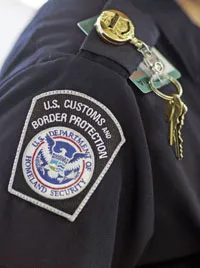
The seizure of electronic devices at the U.S. border has long operated under a different set of rules than searches elsewhere in the country. A 2008 ruling by the 9th Circuit Court of Appeals in United States v. Arnold cemented this reality, establishing that federal agents can inspect laptops and other digital media without probable cause or a warrant. The case began on July 17, 2005, when U.S. Customs and Border Protection agents at Los Angeles International Airport pulled Michael Timothy Arnold aside.
Arnold had just arrived from the Philippines. During secondary screening, an agent requested he turn on his laptop. He did. The agent then handed the machine to a colleague who began scrolling through the desktop. Two folders caught their eye. They contained photographs.
Within moments, the agents believed they had found child pornography. They confiscated the laptop and other gear—CDs, a portable hard drive, and a flash drive—but allowed Arnold to leave. Two weeks later, a warrant was secured based on those initial visual inspections. Arnold was charged with possession and transportation of child pornography.
The Legal Battle Over Digital Evidence
Arnold’s defense team moved to suppress the evidence. Their argument hinged on the Fourth Amendment. They contended that while border agents can search for immediate physical threats like explosives or weapons, digging into the stored data of a device is a fundamentally different intrusion. A search for a bomb is about safety. A search of hard drive files is about evidence gathering.
The district court initially agreed with Arnold. They suppressed the evidence, ruling that the agents had overstepped. But the prosecution appealed. The appellate court reversed that decision, citing the longstanding “border search exception.” Under this doctrine, searches at the port of entry do not require the usual warrants or probable cause that apply inside the country.
Arnold’s lawyers took the case to the 9th Circuit in San Francisco. In a unanimous decision issued on April 21, 2008, the three-judge panel upheld the reversal. The court concluded that protecting national security justified allowing federal agents to seize and search electronics without probable cause. The judgment did not limit the scope of these searches to terrorism-related crimes. Agents could look for evidence of any offense.
The Real-World Impact of Border Device Searches
The implications of Arnold extend far beyond one man’s legal troubles. Once a device is seized, the government can keep it for an indefinite period. There is no guarantee it will ever be returned. Forensic analysis can take days, weeks, or months. During that time, the owner is left in limbo, potentially without access to critical work files, personal communications, or financial records.
The Department of Homeland Security frames these searches as essential tools for counterterrorism. The court’s language, however, is broader. It permits agents to comb through every folder, every deleted file, and every hidden directory. They are not just looking at what is visible on the screen; they are searching the entire digital storage medium.
This raises urgent questions about where the line is drawn. If the court views digital information as evidence regardless of the container, does that logic extend to internet traffic passing through U.S. servers? Some privacy advocates fear this is a slippery slope. If a laptop can be dissected without cause, why not monitor all international data flows? The distinction between searching a physical device and intercepting live traffic is becoming increasingly blurred.
Why This Matters for Everyday Users
For the average traveler, the Arnold decision means a loss of expectation privacy at the border. You can pack your bags, but you cannot pack away your digital life with the same assurance of secrecy you might have inside the U.S. The government argues these measures are necessary. They point to the potential for smugglers to hide evidence in plain sight on encrypted drives.
But the power imbalance is stark. Agents hold all the cards. They decide what to look for. They decide how long to keep your device. They decide what constitutes suspicious content. There is no oversight mechanism to ensure the search remains narrow. The tool designed for national security can easily be turned into a general fishing expedition for any irregularity.
This uncertainty affects journalists, activists, lawyers, and ordinary citizens alike. If you cross a border with a laptop, you are subject to a search that would likely require a warrant if conducted in your home. The container no longer matters. Only the data does. And once that data is in the hands of the government, the owner has little recourse.
The debate over border search powers continues to evolve. New technologies emerge. Encryption improves. But the legal precedent set in 2008 remains firm. Federal agents retain the right to search your devices without probable cause. The question is no longer whether they can do it. It is whether they will stop.
For now, the burden is on the individual to secure their data before crossing. Use strong passwords. Enable full-disk encryption. Remove sensitive files if possible. But even with these steps, the threat of seizure remains. The border is not just a geographic line. It is a digital threshold where privacy rights are significantly diminished.
The court’s decision means that in order to protect national security, federal agents can confiscate electronics without probable cause and search them for evidence of a crime.
This reality forces a difficult choice. Travel freely, or travel securely. You cannot always do both. The Arnold case highlighted the tension between collective safety and individual liberty. It showed how easily the definition of “search” can expand to include the entirety of a person’s digital existence. As technology becomes more integrated into our daily lives, the border search exception grows more intrusive.
The legal system has yet to fully grapple with the volume of data modern devices hold. A laptop from 2008 was different from the smartphone in your pocket today. That phone contains
The internet didn’t just react to the 9th Circuit Court’s ruling. It exploded.
Critics are calling the policy unconstitutional. You see it on blogs, forums, and news comment sections. The consensus among detractors is that the government has overstepped. Meanwhile, a smaller contingent argues the opposite. They point to the tangible threat of terrorism. For them, national security trumps individual privacy. They believe searching devices is a necessary shield for the United States.
But here is the friction point.
Critics argue the policy is too broad. It isn’t targeted. If federal agents can search electronic devices for evidence of any crime, they aren’t just hunting terrorists. They are hunting everyone. Take the case of Michael Arnold. He wasn’t a suspected bomber. He was a traveler. Yet his digital life was exposed. This suggests the policy casts a net too wide. It catches civilians in the dragnet.
Then there are the conspiracy theories.
Some online voices suggest a darker motive. They claim organizations like the Recording Industry Association of America (RIAA) are behind the push. The theory? That these groups want federal agents acting as “music police.” They imagine a scenario where customs officers scan laptops for illegally obtained MP3s. While the RIAA might benefit from stricter seizures, there is zero evidence linking them to the court’s decision. It remains speculation. Pure speculation.
The real-world impact, however, is measurable.
The Washington Post reported a shift in corporate behavior. International businesses are rewriting their travel policies. Executives are being told to leave confidential data off their laptops. They fear proprietary secrets will be compromised or, worse, held hostage. If a device is confiscated and contains the only copy of critical data, the business is at the mercy of the U.S. government. That is a massive risk.
So, how do tech-savvy travelers respond?
They don’t protest. They workaround.
Bloggers are sharing methods to bypass customs scrutiny. The suggestions are practical, albeit risky:
- Leave it at home. Don’t bring the laptop. Don’t bring the phone. Travel with nothing digital if possible.
- Partition and encrypt. Use two levels of encryption to hide a partition. The customs agent sees one drive. You see two.
- Physical separation. Keep private data on a smart card or flash drive. Keep that device on your person, not in checked luggage or even your carry-on if it’s swabbed and opened.
- Cloud migration. Wipe your electronics clean. Store sensitive info in a virtual private network (VPN) or secured cloud connection. Arrive with a blank slate.
But here is the catch.
Hiding information from customs agents is a dangerous game. If an agent suspects you are concealing data, the situation escalates. Quickly. You might face secondary screening. Delays. Harassment. The outcome is rarely positive.
Furthermore, if enough people adopt these evasion tactics, the government will react. They will demand more invasive policies. More powerful decryption tools. Mandatory password disclosure.
It is a cat-and-mouse game. And the mouse is winning for now.
The effectiveness of the search policy is questionable. Critics point out that anyone determined to commit terrorism will take precautions. They will hide their data. They will use the very methods described above. So, does the policy actually prevent attacks? Or does it just inconvenience the innocent?
The answer isn’t clear.
The debate over border device searches is far from over. We are seeing a clash between security mandates and digital rights. Businesses are changing. Travelers are adapting. The government is watching.
What happens next will depend on who blinks first.