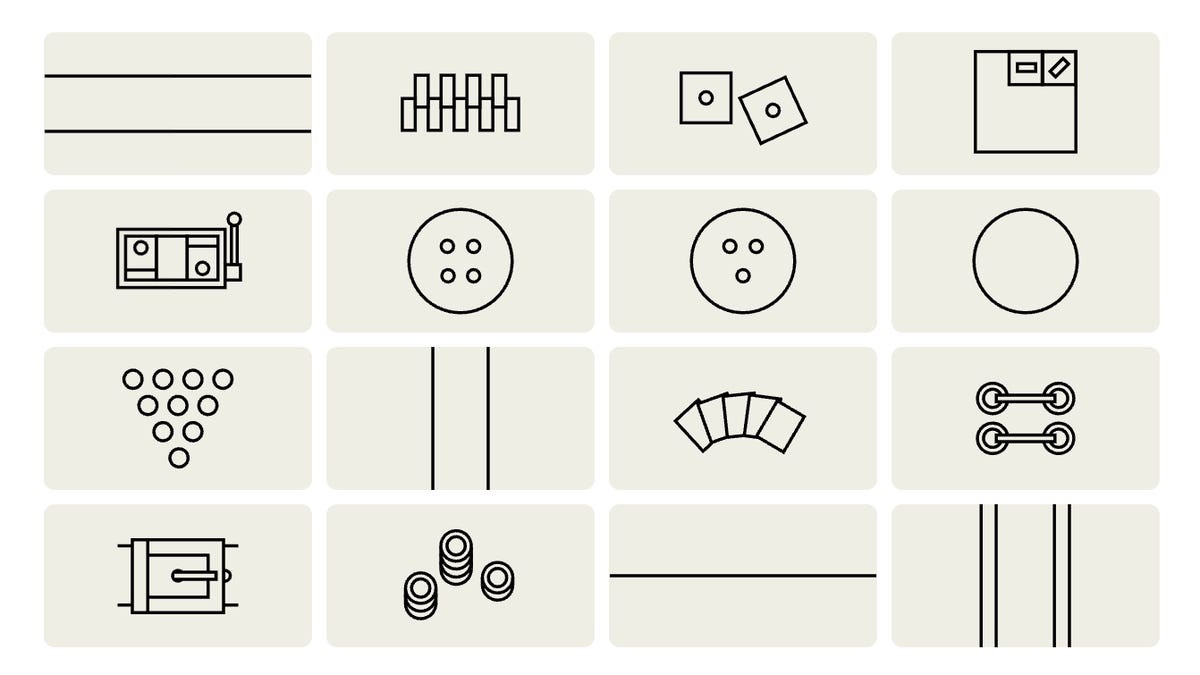
The New York Times’ daily word game, Connections, occasionally breaks from its standard text-based format to challenge players with visual puzzles. The May 6 edition was a notable example, featuring a grid composed entirely of symbols rather than words. While visually striking, this deviation from the norm created significant difficulty for many players, turning a typically quick morning routine into a complex exercise in pattern recognition and lateral thinking.
This puzzle highlights a broader trend in digital gaming: the increasing use of abstract symbolism to test cognitive flexibility. By removing the safety net of written language, the game forces players to interpret icons through multiple potential lenses—identifying objects, actions, or concepts based on minimal visual data. For those seeking to understand the solution or analyze the design logic, the following breakdown provides the answers and the reasoning behind each category.
The Structure of the Challenge
The Connections game requires players to sort 16 items into four groups of four, categorized by difficulty: Yellow (easiest), Green, Blue, and Purple (hardest). In this specific edition, the icons were deliberately ambiguous, with some symbols sharing visual characteristics that could easily lead to misclassification. For instance, a circular icon with three holes could represent either a bowling ball or a button, depending on the context provided by the other items in the grid.
Success in this puzzle relied not just on recognizing individual symbols, but on identifying the overarching theme that linked them. The difficulty escalated significantly in the Purple category, which required knowledge of vexillology (the study of flags) rather than common objects.
Category Breakdown and Answers
Yellow Group: Found in a Casino
This was the most accessible category, relying on common cultural associations with gambling establishments. The four icons represented standard casino equipment.
- Cards : Depicted as a fanned-out hand of playing cards.
- Chips : Illustrated as stacked poker chips.
- Dice : Shown as two dice displaying the “snake eyes” result (two ones).
- Slot Machine : Represented by an icon showing three reels and a lever.
Key Insight : The visual cues for this group were relatively straightforward, serving as an anchor for players to build confidence before tackling the more abstract categories.
Green Group: Ways to Fasten Things
This category required players to identify mechanical or textile methods of closure. The ambiguity here lay in distinguishing between similar circular or linear shapes.
- Buckle : A belt buckle icon.
- Button : A round shape with four holes, distinct from the bowling ball due to the hole pattern.
- Laces : Depicted as crisscrossing lines through eyelets, resembling shoelaces.
- Zipper : Illustrated as interlocking teeth, often confused with other linear designs.
Blue Group: Seen in a Bowling Alley
This group tested recognition of specific sports equipment and infrastructure. The challenge here was differentiating the bowling ball from the button and the lane from flag designs.
- Bowling Ball : A circle with three finger holes, positioned near the button icon.
- Bowling Pins : Arranged in a triangular formation of ten circles.
- Lane : Represented by parallel lines indicating the bowling alley floor and gutters.
- Scorecard : An icon showing a grid with marks for strikes, spares, or misses.
Purple Group: Flag Designs
The most difficult category, this group required players to recognize geometric patterns found in national flags. This was the primary stumbling block for many users, as it relied on specific knowledge rather than immediate visual intuition.
- Circle : A simple circle, reminiscent of the Japanese flag.
- Horizontal Bisection : A flag divided horizontally into two equal parts (e.g., Poland).
- Horizontal Trisection : A flag divided horizontally into three stripes (e.g., Germany).
- Vertical Trisection : A flag divided vertically into three sections (e.g., France or Ireland).
Why This Matters : The Purple category’s difficulty stemmed from its abstraction. Unlike a “dice” or “bowling pin,” a “horizontal trisection” is a descriptive term for a geometric layout. Players had to mentally map these descriptions to the simple lines and shapes presented in the grid.
The Appeal of Visual Puzzles
The success of this all-symbol edition underscores the value of non-verbal problem-solving in digital entertainment. By stripping away language, the game levels the playing field for non-native English speakers while simultaneously increasing the cognitive load for visual interpretation. It transforms the game from a vocabulary test into a test of observation and categorization skills.
For players who enjoy tracking their performance, The New York Times offers a bot that analyzes scores and tracks statistics such as win rates and streaks. This data-driven approach appeals to the “gamification” aspect of daily puzzles, encouraging repeated engagement and self-improvement.
Conclusion
The May 6 Connections puzzle demonstrated that even familiar formats can be reinvented to offer fresh challenges. By utilizing symbols instead of words, the editors created a unique experience that tested players’ ability to find order in ambiguity. While the all-symbol grid was undeniably difficult, it provided a rewarding sense of accomplishment for those who successfully decoded the visual language of casinos, fasteners, bowling alleys, and flags.