President Donald Trump has recently signaled that Cuba is the next target of his administration’s aggressive foreign policy, following military and diplomatic actions in Iran and Venezuela. While the President has spoken loosely about “taking” Cuba, the reality on the ground is a complex mix of severe economic strangulation, tentative diplomatic overtures, and internal political maneuvering driven largely by Secretary of State Marco Rubio.
The current strategy does not appear to aim for a traditional military invasion or immediate total regime collapse. Instead, it seeks to force significant concessions from Havana through maximum pressure, leveraging the island’s dire economic crisis to extract political and economic reforms.
The Mechanics of Maximum Pressure
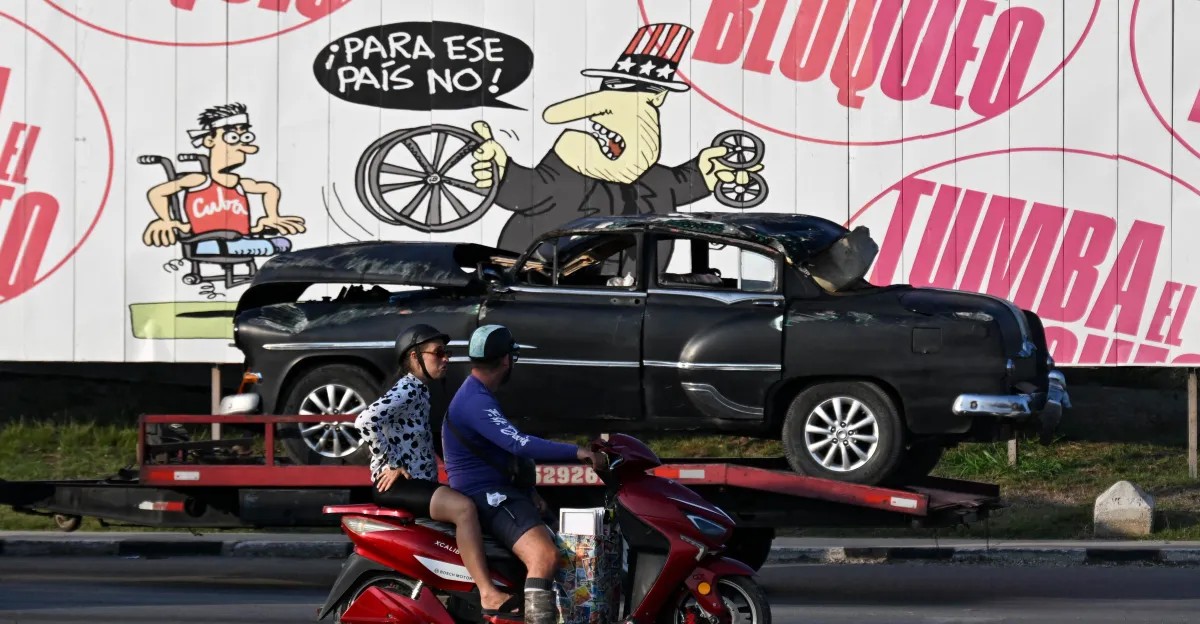
The Trump administration has escalated its long-standing embargo into what experts describe as a near-total blockade. In January, shortly after the ouster of Venezuelan President Nicolás Maduro—a key ally of Havana—the US cut off Cuba’s primary source of oil. Trump subsequently threatened tariffs against any nation continuing to supply fuel to the island, causing countries like Mexico to halt shipments.
Why this matters:
This move has exacerbated a humanitarian crisis in Cuba. With power grids failing and hospitals unable to run ventilators, food prices have skyrocketed, and waste management systems have collapsed. The goal is to create enough internal instability that the Cuban leadership feels compelled to negotiate.
However, the strategy has shown signs of flexibility. By late March, the US allowed a Russian tanker carrying 100,000 tons of crude to reach Cuba, and Mexico indicated it might resume shipments. This suggests the administration is using the threat of total isolation as a bargaining chip rather than an end in itself.
Why the Venezuela Model May Not Fit Cuba
Trump has drawn parallels between Cuba and Venezuela, hoping for a similar outcome: the replacement of an anti-American leader with a more compliant one. But experts warn that this analogy is flawed.
- Political Unity: Unlike Venezuela, where the government was fractured into competing factions, Cuba’s leadership is ideologically unified and tightly controlled. There is no obvious moderate faction within the Communist Party ready to step in.
- Regime Resilience: The Cuban government survived the “Special Period” of the 1990s after the Soviet Union collapsed. Historical precedent suggests the regime prioritizes its own survival over the well-being of its citizens, making it resistant to economic pressure alone.
- Lack of Alternatives: Even if current President Miguel Díaz-Canel were removed, there is no clear “moderate” successor. The only potential bridge-builder identified by the State Department is Raúl Castro’s grandson, known as “El Cangrejo.” However, he is viewed as a negotiator, not a political leader capable of dismantling the communist system.
The Role of Marco Rubio
While Trump provides the public pressure, the strategic engine behind the Cuba policy is Secretary of State Marco Rubio. A Cuban-American whose parents fled the island, Rubio has long been a hawk on Cuba and a critic of the Obama-era rapprochement.
The “Nixon-to-China” Strategy:
Rubio’s hardline reputation gives him unique leverage. Because he is viewed as a primary threat by Havana, any deal he brokers would carry significant weight. He has hinted that the US might accept a gradual transition rather than an immediate overthrow, potentially lifting the embargo if “new people” take charge and implement economic reforms.
“In Marco we trust,” is the prevailing sentiment among some Cuban exiles and policymakers. Rubio is seen as both the greatest threat to the current regime and the only figure in Washington with the political capital to secure a deal that satisfies both hardline critics and pragmatic diplomats.
Diplomatic Moves and Domestic Reaction
Despite the rhetoric, diplomacy is active. A US State Department delegation recently visited Havana—the first US government aircraft to land there since the Obama administration. The US presented a list of demands, including:
* Economic reforms.
* Release of political prisoners.
* Compensation for properties seized during the 1959 revolution.
* Permission for Starlink internet connectivity.
Domestic and Local Sentiment:
In Cuba, some citizens have expressed hope that US pressure might break the regime’s grip, with graffiti supporting Trump appearing in Havana. Activists argue that without the credible threat of force, the regime has no incentive to compromise. However, they also warn that any deal must restore sovereignty to the Cuban people, not just install a pro-American puppet government.
In the US Senate, Democrats are alarmed by the military posturing, introducing legislation to block any unauthorized military action against Cuba. This highlights the growing tension between the executive branch’s aggressive tactics and legislative concerns about escalation.
Conclusion
The Trump administration’s approach to Cuba is less about immediate conquest and more about coercive diplomacy. By combining economic strangulation with targeted diplomatic outreach, the US aims to fracture the Cuban regime’s unity and force concessions. However, without a viable political alternative in Havana or a unified strategy across the US government, the outcome remains uncertain. The success of this gamble depends on whether the Cuban leadership will break under pressure or double down on survival, and whether Marco Rubio can craft a deal that satisfies both Washington’s hawks and the complexities of Cuban reality.