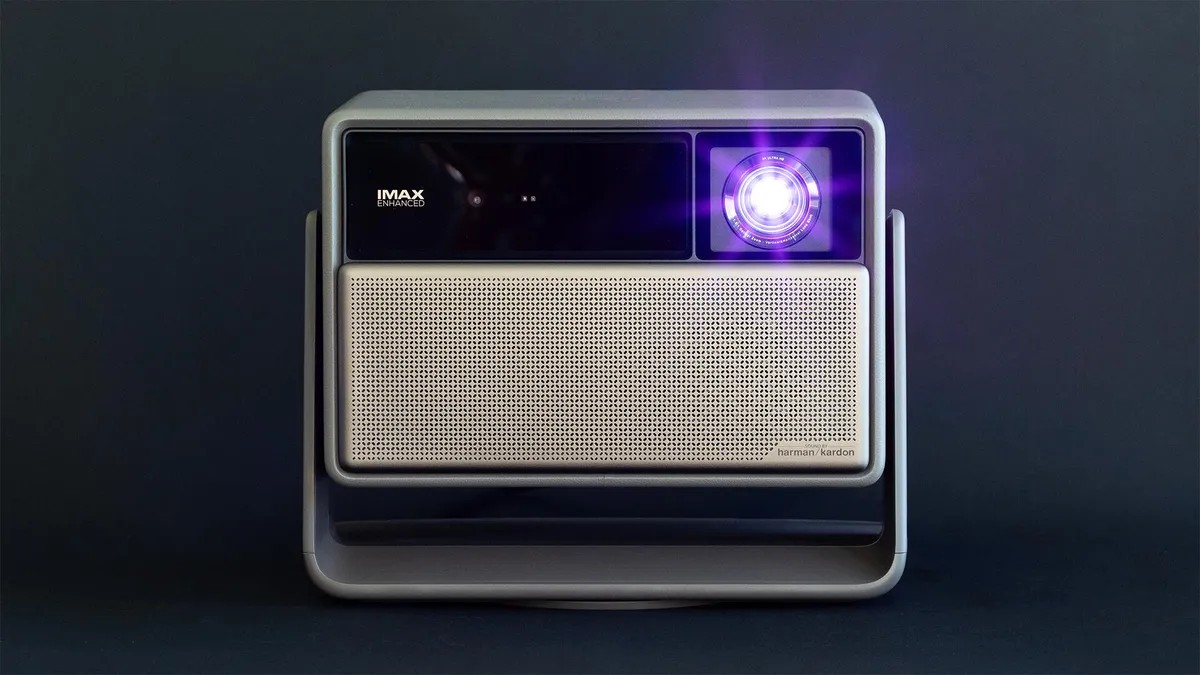
The Xgimi Horizon 20 Max isn’t just another projector; it’s a leap forward in home entertainment brightness. In just months, this model has surpassed all others in light output, delivering an image so intense it might actually require sunglasses. With over 5,700 ISO lumens, the 20 Max can fill any room with a vibrant, wall-sized display while maintaining surprisingly accurate colors and respectable contrast.
However, that performance comes at a steep price: $3,000. The cost puts it in a niche market where minor flaws become unacceptable. While offering impressive brightness, the Horizon 20 Max also suffers from an underwhelming zoom range and occasional production defects that shouldn’t exist at this price point.
Despite these drawbacks, the projector remains a compelling option for those prioritizing sheer light output and a versatile, gimbal-style design. It’s overkill for many, but if you want the brightest possible home theater experience—or just to create a blindingly bright image—the Horizon 20 Max delivers.
The Brightness Revolution
The industry is shifting rapidly. The decline of traditional UHP lamps has accelerated the development of LED and laser technology, resulting in brighter projectors year after year. What once was gradual improvement has become exponential. Just a few years ago, 900 lumens was considered excellent; now, average projectors easily surpass that. The Xgimi Horizon 20 Max boasts nearly 5,000 lumens—exceeding the brightness of many TVs from just a few years ago.
This raises a critical question: How bright is too bright? While previously laughable, the argument is now relevant. The size of most home screens is limited by walls and ceilings. At some point, excessive brightness becomes uncomfortable, forcing users to dial down the output.
Key Specs and Features
The Horizon 20 Max builds on Xgimi’s previous models (Horizon S Max and Ultra) with a larger chassis, gimbal-style base, and improved lens shift.
- Resolution: 4K
- Lumens: 5,700 (ISO)
- Zoom: 1.2-1.5:1
- Lens Shift: ±120% vertical, ±45% horizontal
- Light Source: RGB laser (lifespan not specified)
Unlike cheaper projectors, the 20 Max includes both horizontal and vertical lens shift with a motorized zoom. The vertical shift is particularly impressive, allowing for downward projection without keystone correction. However, the zoom range (3 feet) feels limited, potentially restricting placement options.
Quality Control Concerns
One unit tested exhibited dust or another optical flaw, creating bright circles in the upper left of the image. This is unacceptable for a $3,000 product and should never occur. Such defects highlight the need for stricter quality control at this price level.
Brightness and Picture Quality
The Xgimi Horizon 20 Max measures 2,699 lumens in its most accurate mode, 15% higher than the Anker Nebula X1. In “High Power” mode, it reaches a remarkable 4,850 lumens. While brightness is crucial, image quality must also deliver. The contrast ratio is a solid 1,367:1, above average but slightly lower than the Anker Nebula X1. Color accuracy is good but not perfect.
Connectivity and Interface
The Horizon 20 Max strikes a balance between streaming-focused projectors and traditional models. It includes two HDMI ports, USB ports, optical and analog audio outputs, Bluetooth, and integrated Harman/Kardon speakers. The built-in Google TV interface provides access to most streaming services with full picture settings.
Competition: Nebula X1, BenQ W4100i
Compared to the Anker Nebula X1 and BenQ W4100i, the Horizon 20 Max stands out in brightness but falls short in some other areas. The Anker offers better contrast, while the BenQ delivers more natural colors. RGB laser projectors may also exhibit chromatic aberration (color fringing) for some viewers with glasses.
The Nebula X1 is best for portable use, the BenQ for traditional setups, and the Xgimi for versatile, non-permanent installations.
The Future of Brightness
The rapid evolution of LED and laser technology means brighter projectors are becoming the new normal. At some point, extreme brightness will offer diminishing returns. If users routinely turn down the output, the extra cost may not be justified.
However, the Horizon 20 Max demonstrates that high brightness no longer comes at the expense of other qualities. Contrast and color remain solid even at these lumen levels. For those willing to pay a premium, the option to create a wall-sized, TV-bright image is now within reach.