The dream of fully automated kitchens has long been a graveyard for ambitious startups. From the salad-making venture Chowbotics (acquired and later shuttered by DoorDash) to Zume, the $400 million pizza delivery disruptor that collapsed in 2023, the industry has proven that replacing human hands and brains with machines is notoriously difficult.
However, Chef Robotics is carving out a different path. Instead of trying to replace chefs in high-pressure restaurant environments, the company has pivoted toward the massive, behind-the-scenes world of industrial food production.
The Pivot That Changed Everything
Originally, Chef Robotics aimed to automate “fast-casual” restaurants—the types of quick-service dining outlets found on most city streets. They quickly realized that the complexity of a restaurant environment might be too high for their current technology.
By shifting their focus to large-scale food manufacturing, they found a more stable and scalable market. Today, the company serves major enterprise clients, including:
– Amy’s Kitchen
– Chef Bombay
– Large-scale school lunch providers
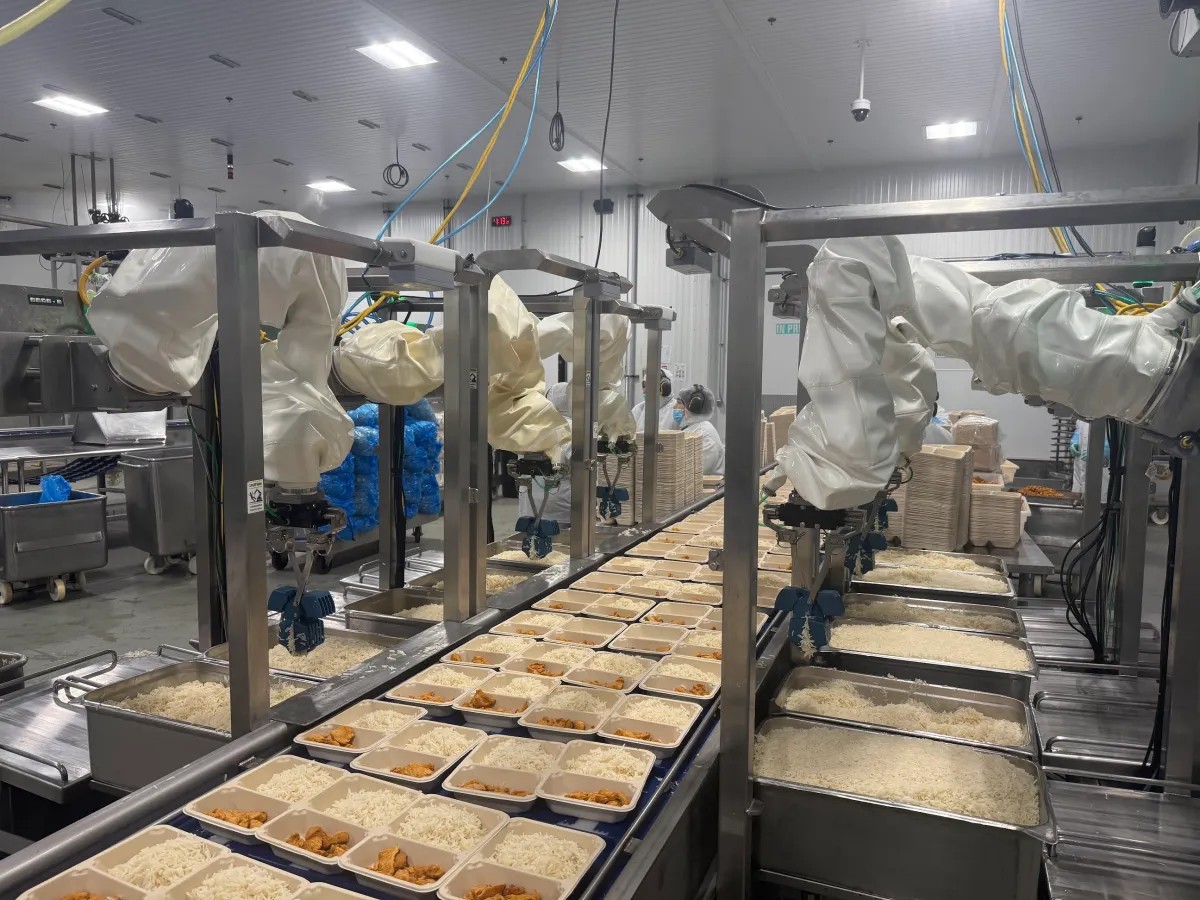
This strategic shift moved the robots from the chaotic, unpredictable front-end of dining to the controlled, high-volume environment of production lines, where precision and repetition are highly valued.
Reaching the 100 Million Milestone
The company recently announced a significant operational milestone: 100 million servings processed.
To clarify the metric, a “serving” is defined as a single portion of food—one component of a larger meal—deposited by a robot into a tray. This number highlights the sheer scale of their current operations. By targeting institutional-scale customers rather than individual restaurants, Chef Robotics has moved from experimental testing to high-volume industrial utility.
The Next Frontier: “Smaller” Kitchens and New Markets
While food manufacturing is their current stronghold, CEO Rajat Bhageria is looking toward the next phase of growth. Interestingly, the company’s definition of a “smaller kitchen” isn’t a local bistro, but rather specialized, high-volume hubs such as:
- Airline Catering: The company has already signed one of the world’s largest airline catering firms.
- Ghost Kitchens: Facilities that exist solely to fulfill delivery orders for platforms like DoorDash.
- Institutional Venues: Future expansion plans include stadiums, prisons, and eventually, a return to the fast-casual restaurant sector.
Why This Matters
The success of Chef Robotics suggests that the future of food automation may not lie in the “robot chef” standing behind a restaurant counter, but in the automated backbone of the global food supply chain. By solving the labor problem in manufacturing and large-scale catering first, the company is building the scale and reliability needed to eventually tackle more complex dining environments.
The transition from restaurant automation to industrial food production represents a shift from trying to mimic human dexterity to mastering high-volume precision.
In short, Chef Robotics has avoided the industry’s common pitfalls by prioritizing high-volume, controlled environments over the unpredictable nature of traditional restaurants.