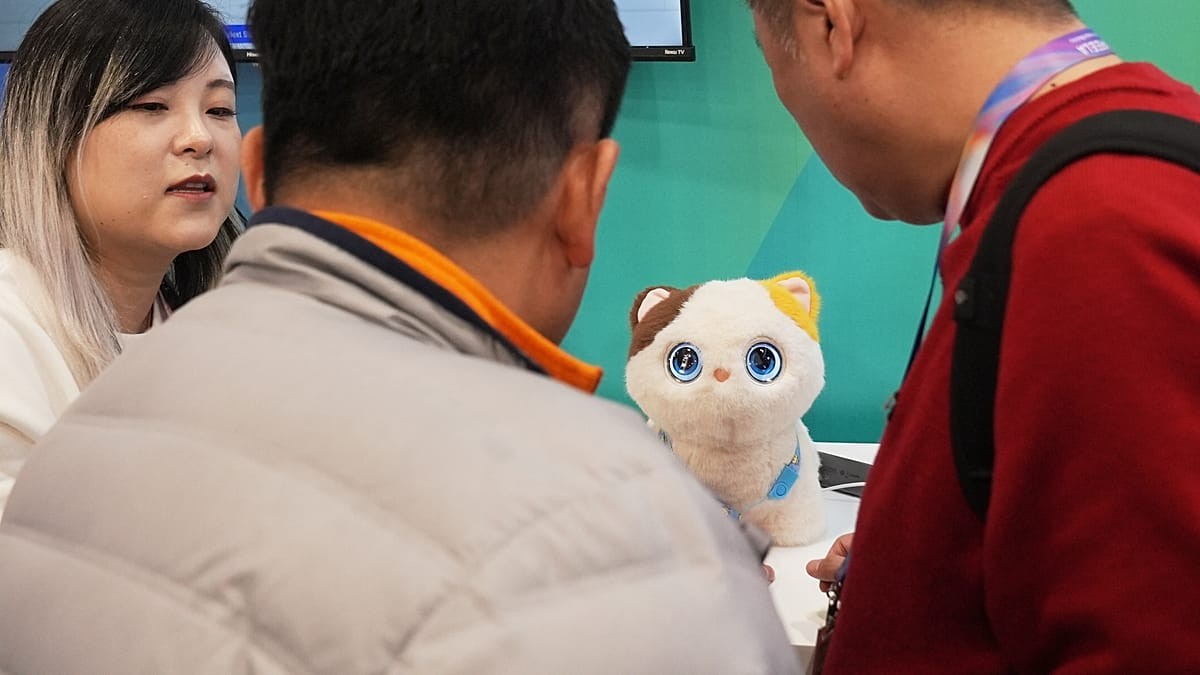
The toy industry is undergoing a rapid transformation, with classic playthings like Rubik’s Cubes and Tamagotchis receiving high-tech overhauls. At CES 2026 in Las Vegas, companies showcased a wave of AI-powered and digitally enhanced toys—a trend that raises important questions about the future of childhood and the role of technology in development.
Reinventing Classic Play
Several iconic toys have been reimagined for the digital age. Rubik’s WOWCube, now featuring 24 interactive screens, offers games beyond the traditional puzzle, even unlocking historical lessons when solved. Priced at $299, it represents a significant shift from analog to interactive learning.
Similarly, LEGO’s Smart Brick introduces light, sound, and reactive play, enabling more immersive building experiences. Tom Donaldson, LEGO’s Senior VP, emphasizes the value of physical play—the building, hiding, even accidental bumps and scrapes—as vital components of childhood development. The company hopes to integrate this physicality with digital imagination.
The Rise of AI Companions
The most striking trend is the emergence of AI-driven “pets.” Takway AI unveiled Sweekar, an “emotionally intelligent” AI companion that physically grows through stages (egg, baby, teen, adult) while simulating body warmth and breathing. This product is designed to foster a long-term bond between humans and AI, blurring the lines between virtual and physical nurturing.
Sharp’s Poketomo, a meerkat-like AI companion, targets young adults struggling with loneliness, though it has also garnered interest from older demographics. Available in Japan for around €300, it demonstrates a growing demand for AI-driven companionship.
The Debate Over Early AI Exposure
The push to integrate AI into toys, particularly for children, is generating debate. Daniela Braga, CEO of Defined.ai, warns that early exposure to AI may disrupt fundamental human learning and skill development. While assistive technologies are an exception, she argues that delaying AI exposure could protect crucial developmental processes.
This trend is partly fueled by the reduced scrutiny faced when marketing AI toys to adults rather than children. Yet, despite this, manufacturers are increasingly targeting younger audiences, pushing the boundaries of technology in play.
The expansion of AI into the toy industry signals a profound shift in how we approach play, learning, and even companionship. Whether this integration will enhance or hinder child development remains an open question, but the direction is clear: the future of toys is increasingly digital and intelligent.