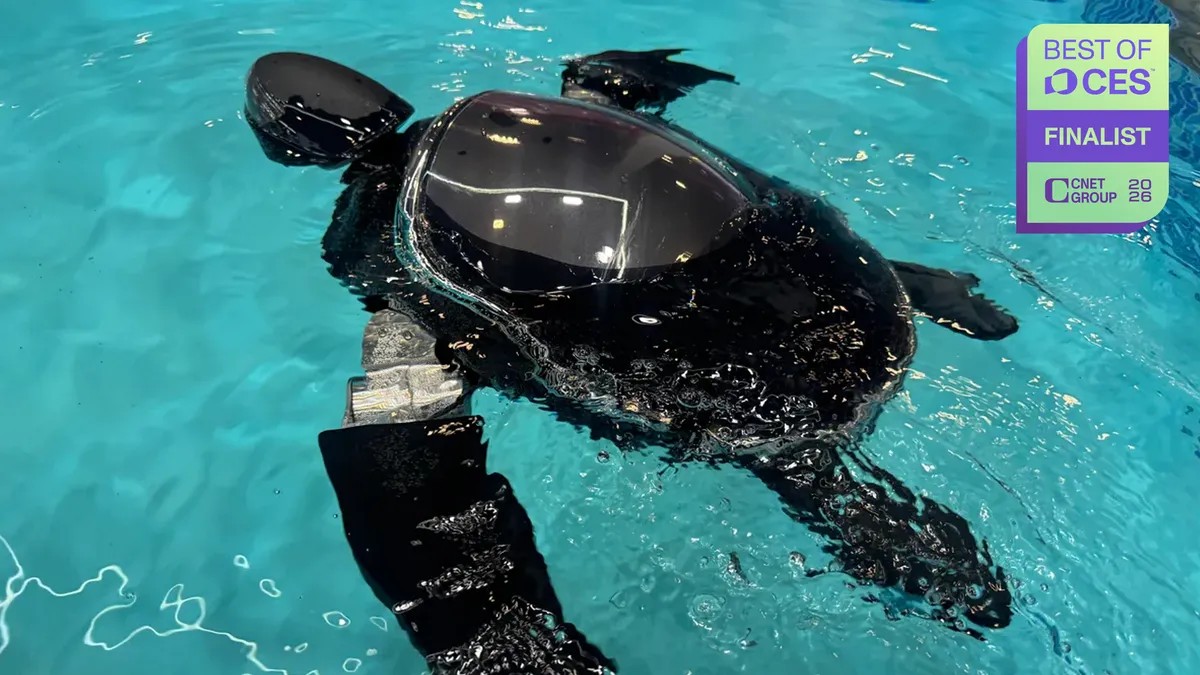
The latest innovation from Beatbot, dubbed “RoboTurtle,” isn’t just another tech demo; it’s a carefully engineered piece of biomimicry with a serious environmental mission. This robot mimics the swimming style of sea turtles so closely that it was developed after two months of studying the animals in their natural habitat. At CES 2026, RoboTurtle proved it can not only swim, but also respond to human gestures, making it appear almost lifelike.
The Science Behind the Swim
Beatbot’s engineers used motion capture technology – the same kind employed in filmmaking – to replicate the precise joint movements of sea turtles. This isn’t about aesthetics; it’s about minimizing disruption to sensitive underwater ecosystems. Unlike traditional underwater drones, RoboTurtle moves silently and naturally, reducing stress on marine life. The team’s goal is to create a research tool that can operate without disturbing coral reefs or scaring off fish populations.
A Tool for Conservation
The RoboTurtle is designed to be deployed in areas where human or other robotic presence would cause harm. One key application being explored is the monitoring of coral reefs in Indonesia, where past environmental damage from boats has underscored the need for non-intrusive observation methods. Researchers plan to use RoboTurtle to track coral recovery and fish populations over time, gathering data without further disturbing the ecosystem.
Technical Capabilities
RoboTurtle can dive to depths of up to five meters, but must surface periodically to transmit data and recharge using its onboard solar panel. This mimics the breathing behavior of real turtles, making its presence even less disruptive. The robot’s built-in AI is still under development, but Beatbot expects full operational deployment in three to five years.
Why This Matters
The RoboTurtle highlights a growing trend in robotics: the integration of biomimicry to solve real-world problems. As climate change and human activity continue to threaten marine ecosystems, tools like this become increasingly important. The fact that Beatbot invested heavily in understanding the nuances of turtle movement underscores a commitment to minimizing environmental impact.
The RoboTurtle isn’t just a cute robot; it’s a sign that tech can be developed with sustainability in mind. While it may take time to reach full deployment, the project is a refreshing reminder that innovation can serve conservation efforts.