Erin Brockovich has a new battleground. Not a courtroom this time. An interactive map.
It’s called the Brockovich AI Data Center Reporting hub. And it is screaming for attention. The premise is simple: residents map their fears. Data centers are expanding everywhere, fueled by an insatiable AI appetite, and locals are tired. They are fighting over water shortages, skyrocketing electric bills, and environmental hazards that no one asked for.
“Erin is really interested in the mapbeing self-reported so that everyone who sends their story can be seen.” – Suzanne Boothby
The result? A visual proof that this is a national crisis.
Counting the Pins
There are 3,674 locations reported so far. Some are built. Some are proposed. Many are under construction, digging holes in quiet neighborhoods that didn’t know what hit them. Anyone with an internet connection can submit a grievance via a web form.
But wait. Brockovich isn’t just dumping this data anywhere. She personally vets every single entry.
It sounds like micromanagement. It is actually quality control. She removes duplicates. She kicks out submissions lacking zip codes. The goal isn’t to catalogue every server farm in America. Pew Research estimates there are 3,000 operating facilities here, with 1,500 more coming online. That number is irrelevant to Brockovich’s strategy.
The map focuses only on one thing. Places where people are mad. Places where communities are speaking up.
One word keeps popping up in these submissions. More than noise. More than the draining aquifers. More than the electric bills that are choking household budgets.
Transparency.
That’s the complaint. Not the pollution itself. The secrecy around it.
Why the Silence Hurts
Residents feel like they are shouting into a void.
Boothby, who edits The Brockovich Report, notes the psychological toll of environmental threats in one’s backyard. It isolates people. They feel unheard. Unimportant. Like background noise to Big Tech executives.
Brockovich asked for concerns in late April. The response was a flood. By the next month, the map had over 2,700 pins derived from nearly 4,000 reports.
It paints a ugly picture.
Data centers are often built in secret. Or at least, with eyes averted. When communities lack information, they lose leverage. They can’t plan. They can’t protest effectively. They just wait until the concrete trucks arrive.
Then what?
Then you have political chaos.
The Pushback is Real
Opposition isn’t niche. It’s mainstream. A recent Gallup poll confirms a majority of Americans now oppose these massive facilities.
State legislatures are catching the vibe. A dozen states are weighing construction moratoriums. Maine tried to ban facilities pulling more than 20 megawattsof electricity. Lawmakers passed it. Governor Janet Mills vetoed it.
The tension is physical. Protests erupted when Oracle and OpenAI broke ground last June on a $16 billion campus in Michigan. Saline Township wasn’t happy about it. Neither is the internet, where readers comment with everything from gratitude to rage about resource consumption.
Doesn’t sound like a “deal” to me. One comment reads.
SpaceX even talked about building these things in space to get off the grid entirely. Which makes you wonder if Earth was ever really the plan.
Centralizing the Noise
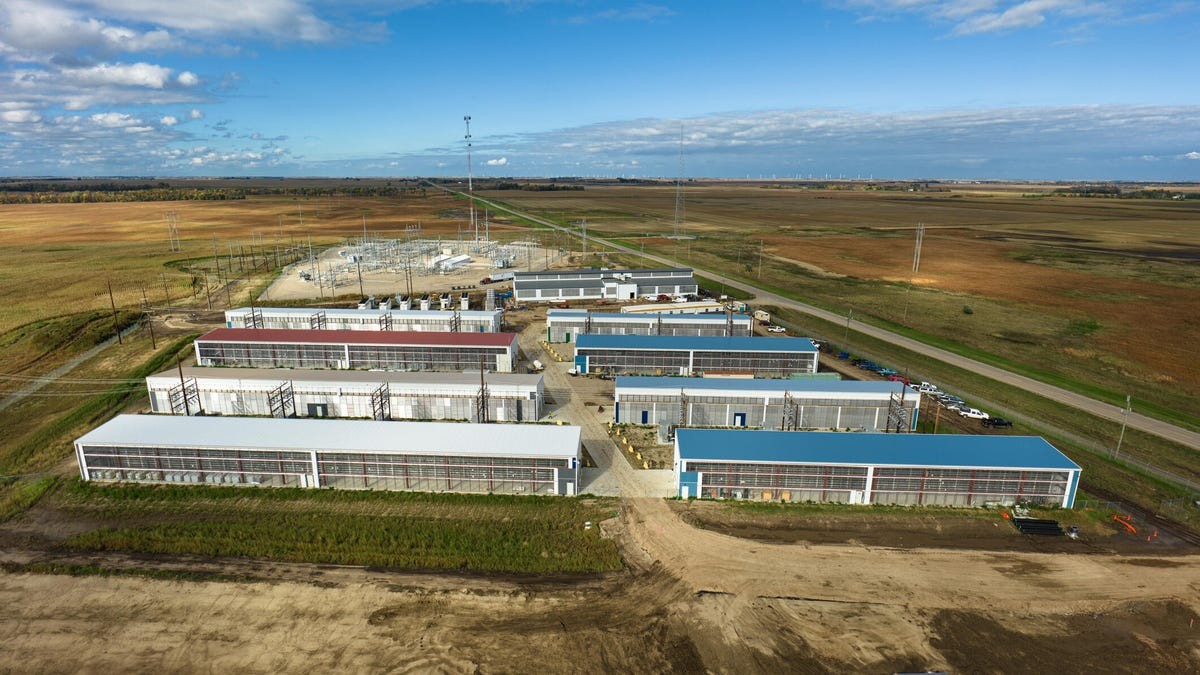
The new site doesn’t just offer pins on a map. It aggregates video footage, news clips, and photos. One stark image shows farmland in Ohio, scraped bare, ready for servers that will process data most locals don’t even use.
It’s about connecting dots.
People frustrated by EPA paperwork or local zoning boards find a home here. The map shows them they aren’t alone. That town in Ohio is linked to the protests in Michigan and the concerns in California.
“It’s a national issue,” Boothby says. “Not just happening in one town here or another.”
It is. And the servers keep coming.
The map grows every day. Reports pour in. Duplicates are deleted. The vetting continues.
You can add your own pin. Or just watch the red markers spread. Like a rash.
Will the data stop flowing? Unlikely.
But maybe now, at least, we can see exactly where it’s going.