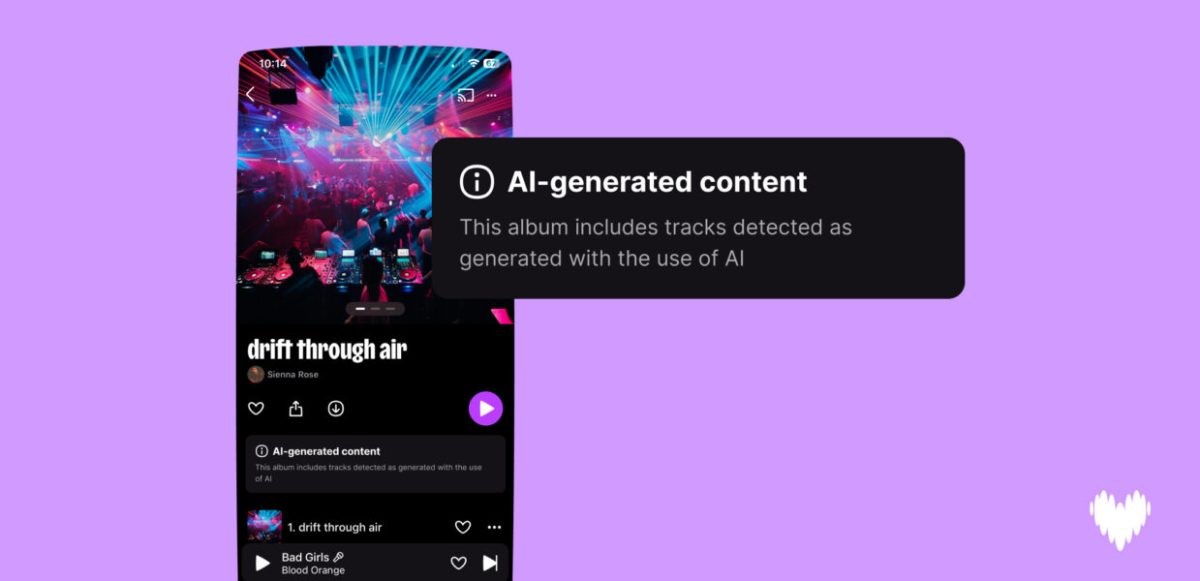
The music streaming landscape is undergoing a massive structural shift. According to recent data from Deezer, artificial intelligence is no longer a niche experiment in music production; it has become a dominant force in the volume of content being uploaded to digital platforms.
The Rapid Rise of AI Content
Deezer’s latest figures reveal a staggering trend: 44% of all new music uploaded to the platform daily is AI-generated. The sheer scale of these uploads is increasing at an exponential rate.
To understand the velocity of this growth, consider the daily upload statistics reported by the company:
– January 2025: 10,000 AI tracks per day (when detection tools were first launched)
– September 2025: 30,000 AI tracks per day
– November 2025: 50,000 AI tracks per day
– Current Status: Approximately 75,000 AI tracks per day (over two million per month)
Consumption vs. Fraud: The Reality of Listening Habits
While the volume of uploads is skyrocketing, listener consumption tells a different story. Currently, AI-generated music accounts for only 1% to 3% of total streams on the platform.
More importantly, there is a significant issue with the quality and intent behind these streams. Deezer reports that 85% of AI-generated streams are flagged as fraudulent. This suggests that much of the AI-generated content is not being sought out by organic listeners, but is instead part of automated “streaming fraud” designed to manipulate play counts or dilute royalty pools.
How Deezer is Fighting Back
To protect the music ecosystem and human artists, Deezer has implemented several aggressive technical measures:
- Algorithmic Isolation: AI-tagged tracks are automatically removed from algorithmic recommendations and are barred from editorial playlists.
- Storage Optimization: The platform will no longer store high-resolution versions of AI-generated tracks.
- Labeling and Detection: Since June 2025, Deezer has been the first major platform to tag AI tracks at the platform level, having already identified over 13.4 million AI tracks throughout the year.
“AI-generated music is now far from a marginal phenomenon,” stated Deezer CEO Alexis Lanternier. He emphasized the need for the entire ecosystem to act to safeguard artists’ rights and ensure transparency for fans.
The Perception Gap: Can Listeners Tell the Difference?
The rise of AI music presents a profound challenge for consumer perception. A survey conducted by Deezer last November highlighted a growing “blind spot” in human hearing: 97% of participants could not distinguish between fully AI-generated music and music made by humans.
This inability to differentiate creates a tension between technology and tradition, reflected in public opinion:
– 80% of listeners believe AI music should be clearly labeled.
– 52% of listeners argue that 100% AI-generated songs should not compete with human artists in mainstream music charts.
This tension is not theoretical; recently, an AI-generated track managed to top the iTunes charts in several major markets, including the US, UK, France, Canada, and New Zealand, proving that AI content can indeed achieve mainstream commercial success.
Conclusion
While AI-generated music is flooding streaming platforms at an unprecedented rate, it remains largely disconnected from genuine listener interest and is frequently tied to fraudulent activity. The industry now faces the critical task of balancing technological innovation with the protection of human creativity and chart integrity.