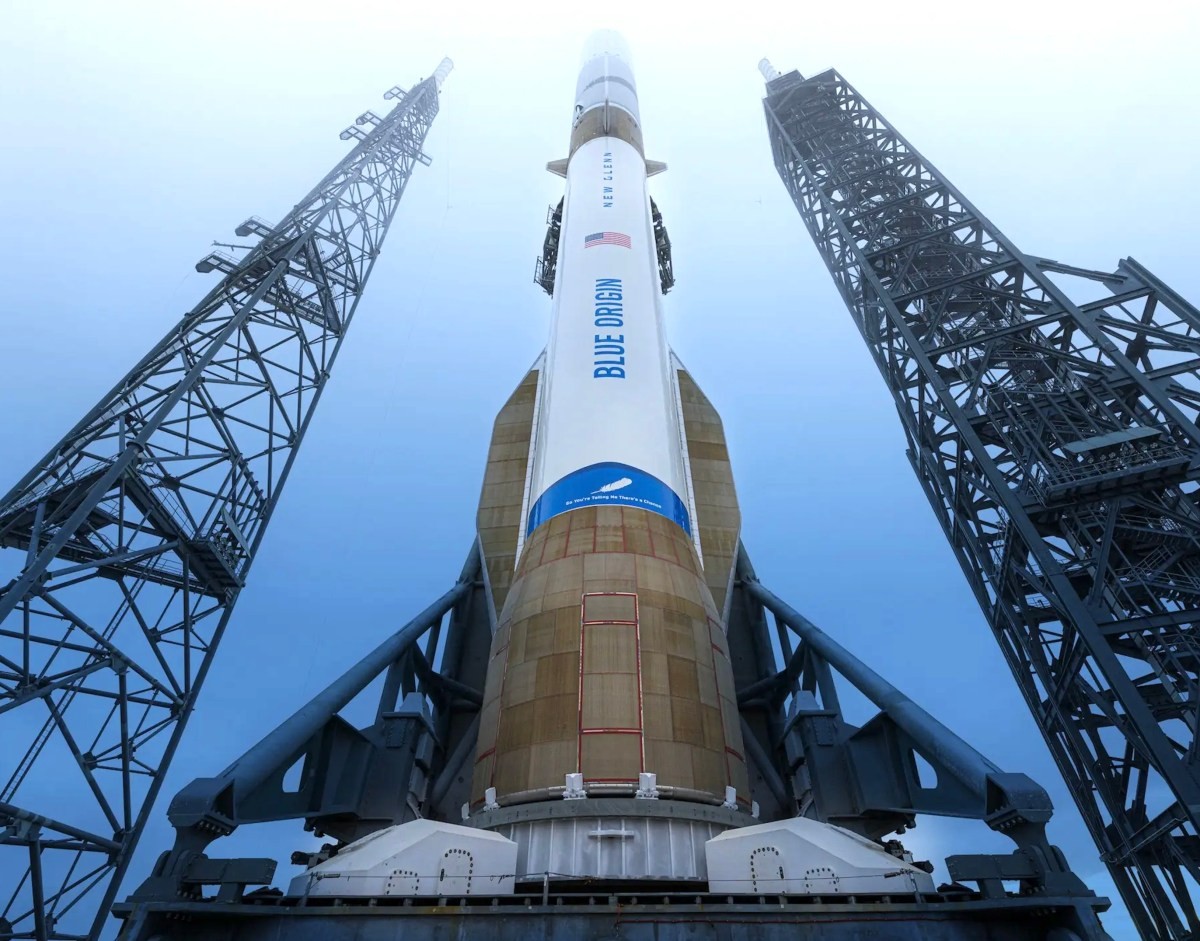
Jeff Bezos’ Blue Origin is seeking regulatory approval to launch a massive satellite network – over 50,000 spacecraft – intended to function as orbiting data centers. This move signals a growing interest within the tech industry to shift compute-intensive operations off-planet, driven by the desire for unlimited solar energy, relaxed regulations, and the rising demands of artificial intelligence.
The Rationale Behind Orbital Computing
The core idea behind “Project Sunrise,” as Blue Origin calls it, is to alleviate the strain on terrestrial data centers. Traditional data storage and processing require significant water and energy resources, especially as AI workloads grow exponentially. Space-based computing bypasses these constraints: sunlight is free, and orbital operations face fewer bureaucratic hurdles. The vision is that future AI inference will increasingly happen in orbit, leveraging the unique advantages of the space environment.
Competition and Challenges in Space Data
Blue Origin is not alone in this pursuit. SpaceX has proposed launching a million satellites for distributed data processing, while the startup Starcloud envisions 60,000 spacecraft. Even Google, through its “Project Suncatcher,” is preparing demo launches in partnership with Planet Labs. However, realizing these projects faces major economic and technological hurdles.
- Cooling: Keeping processors operational in the extreme temperatures of space remains a significant challenge.
- Communications: Reliably communicating between satellites using powerful lasers at scale is unproven.
- Radiation: The harsh space environment can degrade chip performance over time.
- Launch Costs: The price of reaching orbit must fall drastically – many are betting on SpaceX’s Starship to deliver this.
Blue Origin’s Potential Advantage
Blue Origin may hold a competitive edge due to its New Glenn rocket, which is now operational. Unlike SpaceX, Blue Origin is not solely reliant on reusable tech, but its New Glenn rocket is one of the most powerful launch vehicles available, potentially enabling the company to establish a vertically integrated space infrastructure. This could mirror SpaceX’s success with Starlink, where owning both the launch and satellite components gave it a decisive market advantage.
Orbital Congestion and Environmental Concerns
Beyond the technical hurdles, space itself presents a bottleneck. Adding tens of thousands of satellites exacerbates the risk of orbital collisions. Burning up obsolete satellites in the atmosphere, the standard disposal method, could also harm the ozone layer. These concerns will likely escalate as more companies crowd key orbits.
Timeline and Outlook
Experts suggest that large-scale orbital data centers are unlikely to become a reality until the 2030s. The success of these projects hinges on technological breakthroughs, falling launch costs, and addressing the looming environmental and logistical challenges. Despite the hurdles, the long-term strategic value of shifting compute to space – for both economic and geopolitical reasons – remains high.