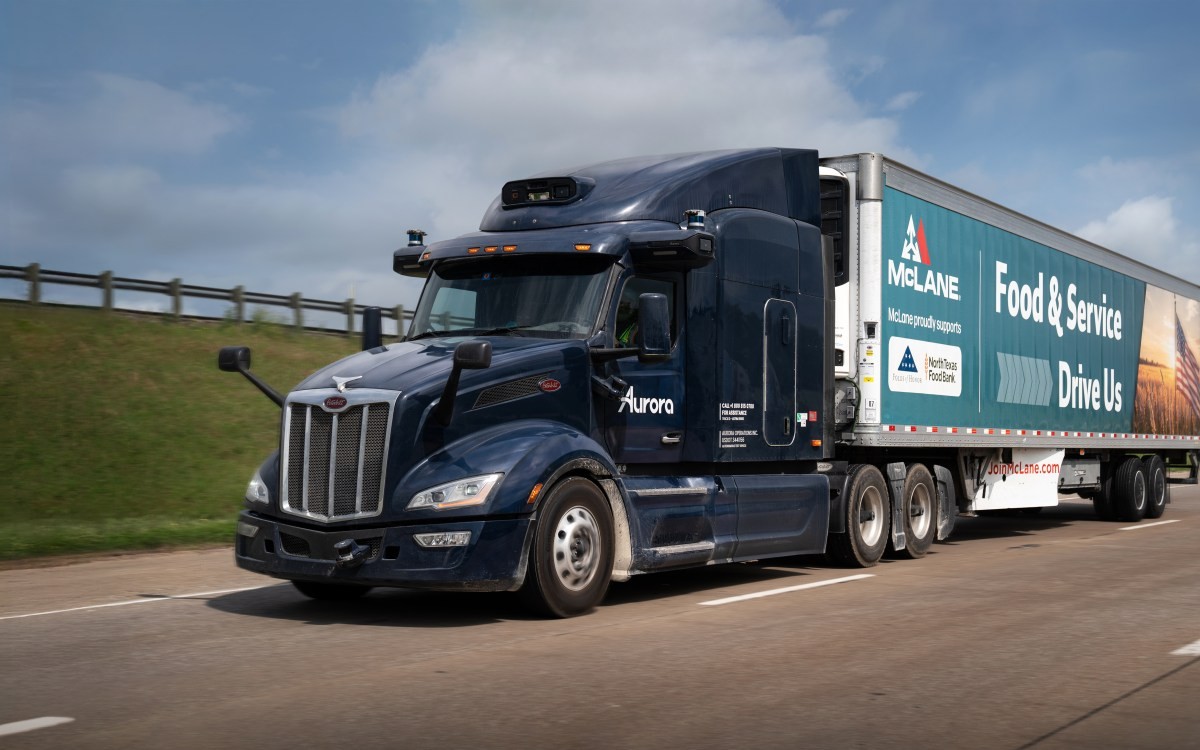
Aurora Innovation has officially transitioned from testing to commercial operation, launching fully driverless truck routes for distribution giant McLane. This agreement marks a significant milestone in the autonomous vehicle industry, demonstrating that long-haul freight can be moved without human drivers on board, while maintaining strict safety protocols through remote monitoring and strategic handoffs.
From Pilot to Profit: The McLane Agreement
The new commercial contract, announced Wednesday, sees Aurora’s self-driving trucks transporting goods between Dallas and Houston. This is not a theoretical test; it is a live, revenue-generating operation that runs seven days a week.
The shift from a pilot program to full commercial deployment was gradual. The companies began testing in 2023 with autonomous trucks accompanied by human safety operators. After expanding to two round-trips daily, McLane approved the move to fully driverless operations.
Key operational details include:
* No Human Driver: The vehicles operate autonomously without a human safety driver who can take control of the steering wheel or pedals.
* Human Observer: Per an agreement with truck manufacturer Paccar, a “human observer” remains in the cab. This individual does not operate the vehicle but serves as a passive monitor.
* Strategic Handoff: Aurora handles the long-haul highway portion of the trip. Upon reaching terminals located just off the freeways in Dallas and Houston, the load is handed over to McLane drivers for final local deliveries to customers, such as fast-food chains.
A Broader Strategy: Becoming an Operator, Not Just a Developer
This deal is part of Aurora’s broader pivot from being solely a technology provider to becoming a commercial logistics operator. By running its own routes, Aurora aims to generate direct revenue from freight haulage rather than relying exclusively on licensing its technology to other companies.
The McLane contract follows a series of strategic moves that validate Aurora’s business model:
* Service Launch: Aurora launched its commercial self-driving truck service in Texas a year ago.
* Diverse Cargo: The company recently secured a contract to haul frac sand for Detmar Logistics, showing versatility beyond standard distribution.
* Hardware Partnerships: Hirschbach Motor Lines agreed to purchase 500 Aurora-powered trucks, a deal expected to close later this year.
Expanding the Network
Aurora is not limiting its operations to the Dallas-Houston corridor. The company currently operates driverless trucks—some with human observers—across several major Sun Belt routes, including:
* Fort Worth to El Paso
* El Paso to Phoenix
* Fort Worth to Phoenix
* Laredo to Dallas
Looking ahead, Aurora plans to expand its partnership with McLane to include new routes between distribution centers across the U.S. Sun Belt by the end of the year.
Why This Matters
The shift from “safety driver” to “human observer” is a critical technical and regulatory step. It signals that the technology is mature enough to handle highway driving without immediate human intervention, reducing labor costs and increasing efficiency for long-haul logistics. However, the reliance on local drivers for final delivery highlights a hybrid model that may persist for years, balancing the efficiency of autonomous highways with the complexity of last-mile urban delivery.
Conclusion: Aurora’s deal with McLane proves that driverless freight is no longer just a prototype concept but a viable commercial reality. By combining autonomous long-haul efficiency with traditional local delivery, Aurora is setting a new standard for how goods will move across America’s supply chain.