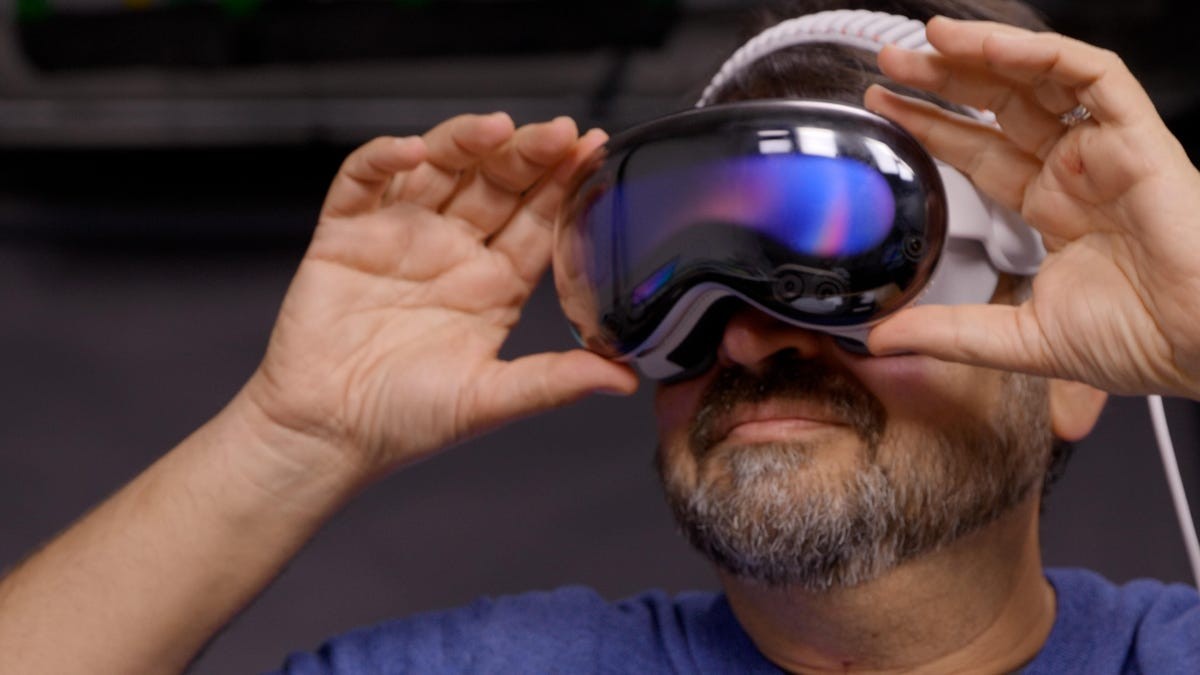
Apple’s updated Vision Pro offers incremental improvements in performance, but remains fundamentally unchanged in its core proposition: a $3,500 spatial computer that feels more like a proof-of-concept than an essential device. While the new M5 chip and refined head strap enhance the experience, the headset still suffers from bulk, high cost, and a lack of killer applications that justify its price tag.
Hardware Refinements: Comfort and Power
The latest Vision Pro boasts a faster processor and an improved Dual Knit head strap, addressing one of the original model’s biggest complaints. The strap, now with additional support, distributes weight more evenly, although the device remains heavier than competitors like the Meta Quest 3. Apple prioritized performance over radical weight reduction, resulting in a headset that is still noticeable to wear for extended periods.
The M5 chip delivers a 10% performance boost in pixel rendering and smoother motion at 120Hz. While not a dramatic leap, these refinements contribute to crisper visuals and reduced blur. However, the field of view remains narrower than on other VR headsets, creating a “goggle-eyed” effect.
Software and Ecosystem Limitations
Despite hardware advancements, the Vision Pro’s software ecosystem lags behind. Apple has added support for PlayStation VR2 controllers and the Logitech air stylus, expanding input options, but the availability of high-end games and creative apps remains limited. Key Apple applications like Maps, GarageBand, and Final Cut Pro are notably absent, hindering the device’s potential as a full-fledged creative workstation.
The VisionOS 26 update introduces widgets that can be anchored to real-world spaces, enhancing the immersive experience. The Persona avatar system continues to evolve, offering increasingly realistic digital representations for virtual collaboration. However, Apple has yet to fully integrate the Vision Pro with its broader ecosystem, meaning seamless connectivity with iPhones, iPads, and Apple Watches remains elusive.
The Core Problem: Value and Use Cases
The fundamental issue with the Vision Pro is its cost-benefit ratio. While the technology is impressive, the device feels more like a first-generation product than a mature consumer device. Its primary use cases remain niche: personal cinema, immersive gaming, and occasional productivity extensions.
Bugs and interface quirks persist, including app crashes and imprecise eye-tracking selection. The lack of a dedicated stylus accessory and untapped AI processing capabilities further limit its potential. Despite the M5 chip’s power, Apple has not yet unleashed the full range of AI-driven features that could truly justify the price.
Conclusion
The Apple Vision Pro remains a compelling technological showcase, but it is not yet a practical daily tool for most consumers. While incremental improvements address some of the original model’s shortcomings, the high cost, limited software support, and lingering usability issues prevent it from becoming a mainstream product. Until Apple addresses these fundamental challenges, the Vision Pro will remain a fascinating glimpse into the future of computing—one that most people cannot afford to join.