Most people understand the basic anatomy of the internet. You have nodes, which are just computers. You have a connecting medium, whether that’s a copper wire or wireless signal. You have specialized gear like routers or hubs keeping the traffic moving. These pieces work in unison to shuttle data across the globe. But there is a critical component often overlooked in the home office or small business setup. It is the switch.
Switches are not just optional extras. They are fundamental to speed.
The Problem With Hubs
To understand why switches matter, you have to look at what they replaced. Older networks often used hubs. Hubs broadcast data to every device on the network. If three computers are talking, all five are seeing the traffic. It is chaotic. It is slow. It is inefficient.
Switches fix this by creating direct lines of communication. They allow different nodes to talk to one another without the whole network listening in. This makes the process smooth. It makes it efficient.
What Is a LAN Switch?
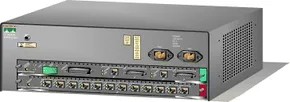
A LAN switch is a device that provides a separate, dedicated connection for each node in a company’s internal network. Think of it as instant privacy. When Computer A talks to Computer B, the switch creates a temporary, isolated network between those two devices. No one else sees the data. No one else clogs the bandwidth.
This is the core of Ethernet networking today. We rely on LAN switches to handle the heavy lifting inside our buildings. They take the messy broadcast of old hubs and turn it into a structured, high-speed highway.
Beyond the Basic Connection
We are only scratching the surface here. A LAN switch is more than just a dumb connector. It uses transparent bridging to learn where devices are located. It supports VLANs (Virtual Local Area Networks) to segment traffic for security. It uses trunking to carry multiple VLANs over a single cable. And it relies on spanning trees to prevent loops that could crash the entire network.
Why does this matter to you? If your Wi-Fi feels sluggish or your file transfers take forever, it might not be your internet provider. It could be your local infrastructure. Understanding how these switches operate helps you troubleshoot bottlenecks before they become full-blown outages.
“Switches allow different nodes of a network to communicate directly with one another in a smooth and efficient manner.”
The internet is global. But the real work happens locally. It happens in the switch. And once you start looking at how data moves through these devices, you will never look at a router the same way again.